A bolt, then another. The assembly line speeds up and, in a few minutes, one of the most memorable sequences of Modern Times is created. While Charlie Chaplin turned a mechanical operation into a comedic device, he also outlined a world where production is fragmented, made in series, and assembled. The design of objects becomes the domain of the industrial designer, part engineer, part draftsman.
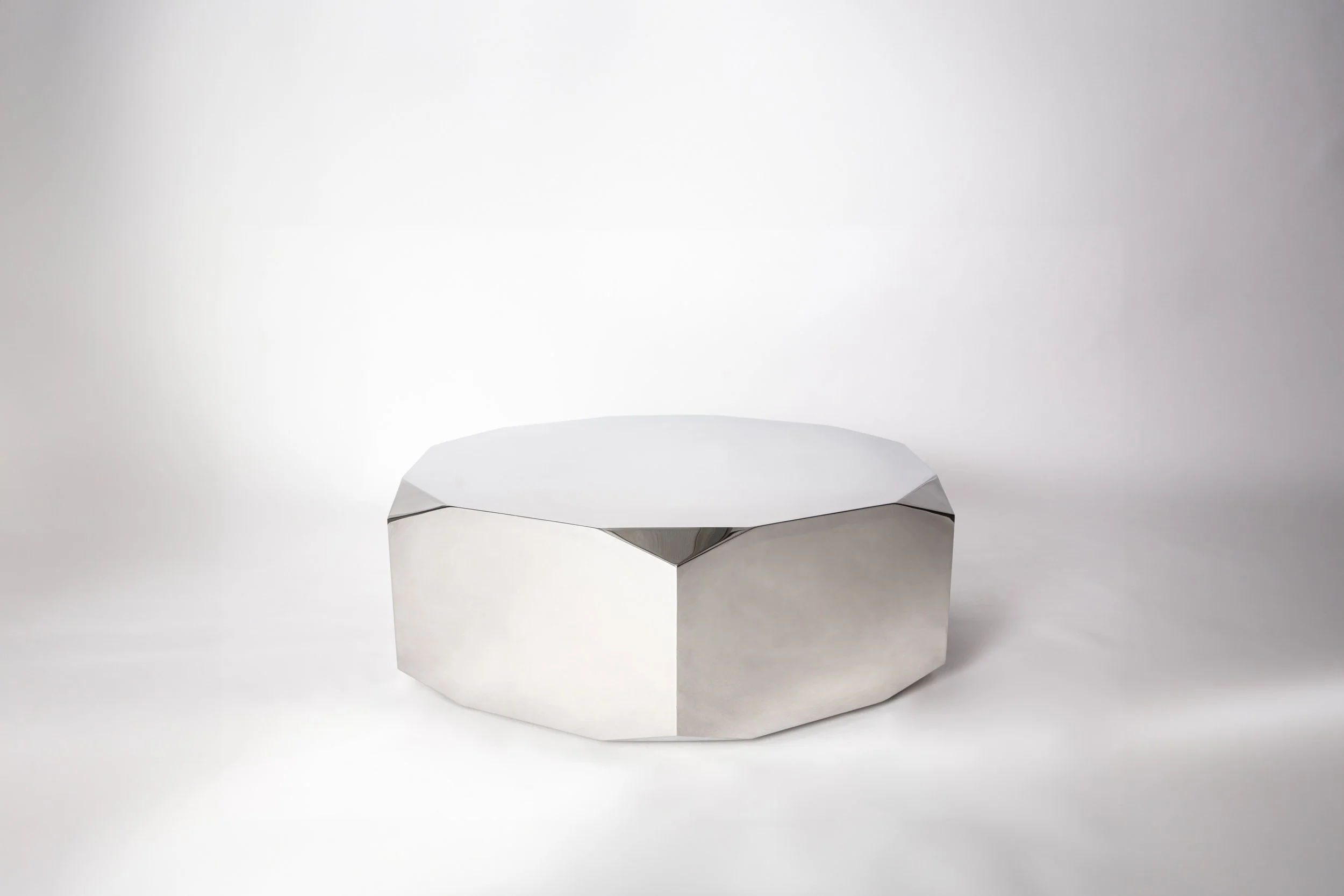
Maurice Marty, who graduated from the École Nationale Supérieure des Arts Appliqués et des Métiers d'Art, became aware of this shift when he met Roger Tallon, who infused movement into trains, subways, and motorcycles. Curious about everything and close to various artists from the Nouveau Réalisme movement, Marty observed the bolts assembled by Arman and chose to isolate and view them aesthetically. As the post-war industrial boom led to a consumer society, Marty played with value inversion. A small bolt, usually mass-produced, became both a sculpture and a limited edition coffee table through enlargement. A piece of metal, typically blending into the background, asserted itself as the centerpiece with its reflective material. Bobby Boulon, personified, became more than an assembly element: a key component of social gatherings.
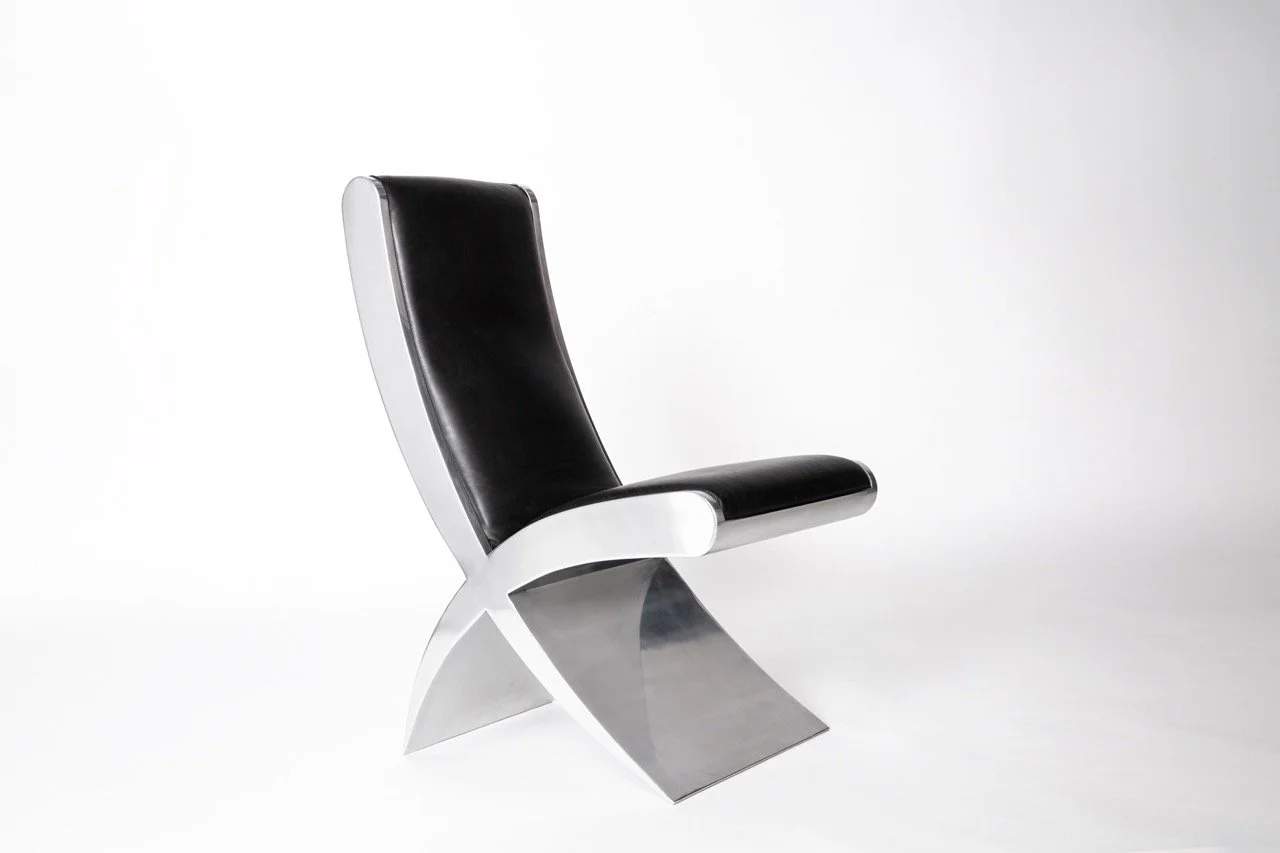
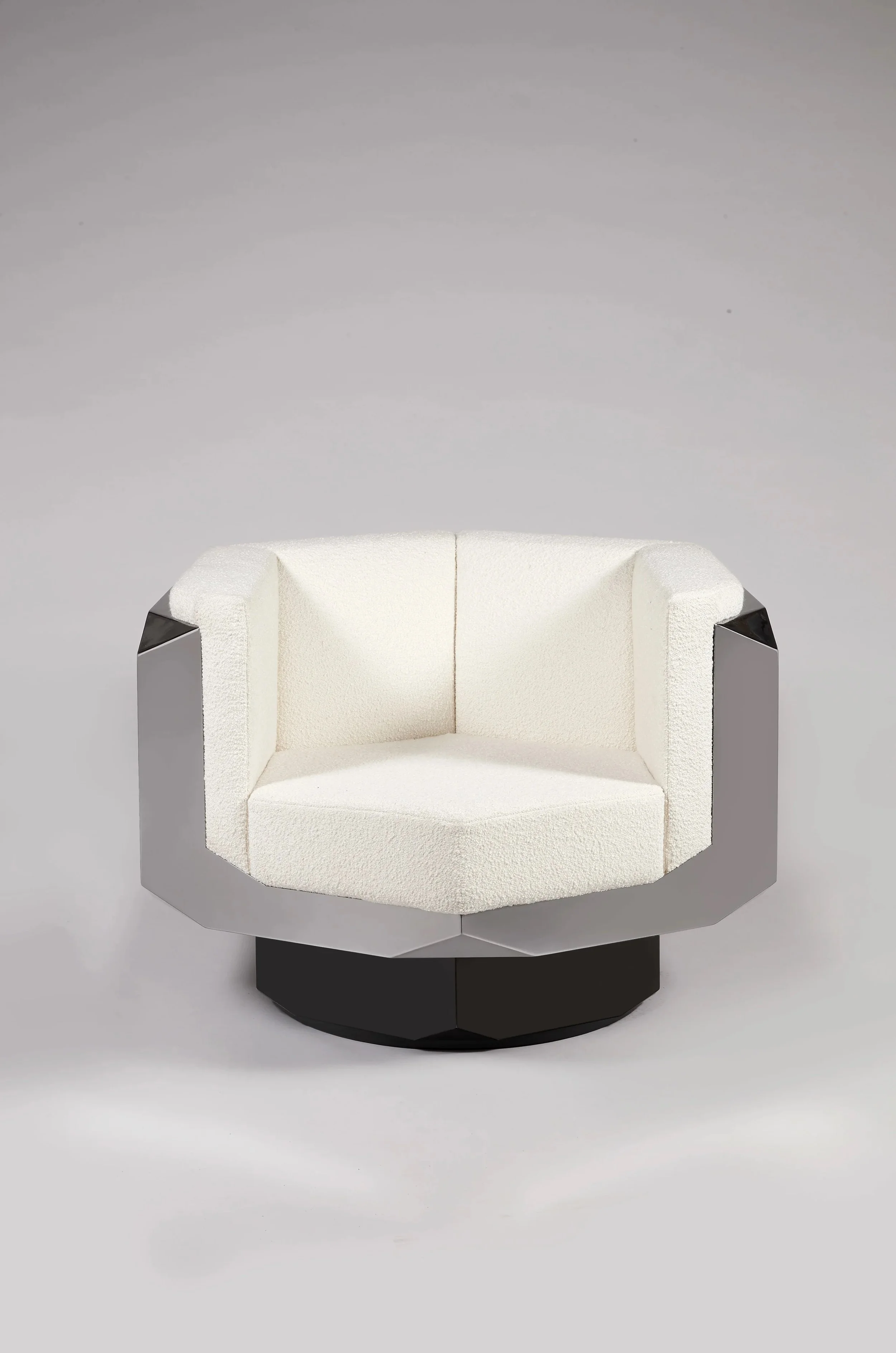
By embracing the structural elements of their buildings, architects from the 19th to the 20th century allowed artists to explore the infinite aesthetic and plastic possibilities of non-precious metals like steel, zinc, and aluminum through new alloys and techniques. Stainless steel retains a mirror effect over time, while aluminum's light and flexible properties allow for seats as thin as a line in space. Maurice Marty's SUMO chairs exemplify this playful approach, imposing in material yet harmonizing with the surrounding space. Concurrently, Ron Arad became known for the soaring designs and balanced forms of his seating.
His more subdued modular shelf concept, FLY ON THE WALL, is a technical and minimalist tour de force. Produced in only two copies, it can present itself as a sleek stainless steel line on the wall or a perfect square, with countless variations to adapt to the objects placed on it or to highlight its sculptural potential.
The love for assembly, construction, and play seems to have accompanied Maurice Marty throughout his career. This childlike spirit is evident in the 1970 Mecakit series, a line of furniture playing on the “self-assembly” concept with mechanical pieces reminiscent of Meccano sets. For Maurice Marty, the object is a repository of imagination, a pretext for play, a story. The love for assembly, construction, and play seems to have accompanied Maurice Marty throughout his career.
This childlike spirit is evident in the 1970 Mecakit series, a line of furniture playing on the “self-assembly” concept with mechanical pieces reminiscent of Meccano sets. For Maurice Marty, the object is a repository of imagination, a pretext for play, a story. This sense of wonder is also found in Yonel Lebovici’s 1978 SOUCOUPE lamp. In this iconic piece, where bolts evoke the era of science fiction, the light emanates from a spaceship, drawing from popular iconography to reveal the subconscious. Always gleaming, the metal used by Lebovici for the spaceship body and its light beam base becomes a medium for projection. Metal gives form to all imaginations and, thanks to its remarkable ductility, infiltrates every aspect of life, from the industrial age to space exploration, permeating daily existence.