
Exhibitions
Jamais les crépuscules ne vaincront les aurores
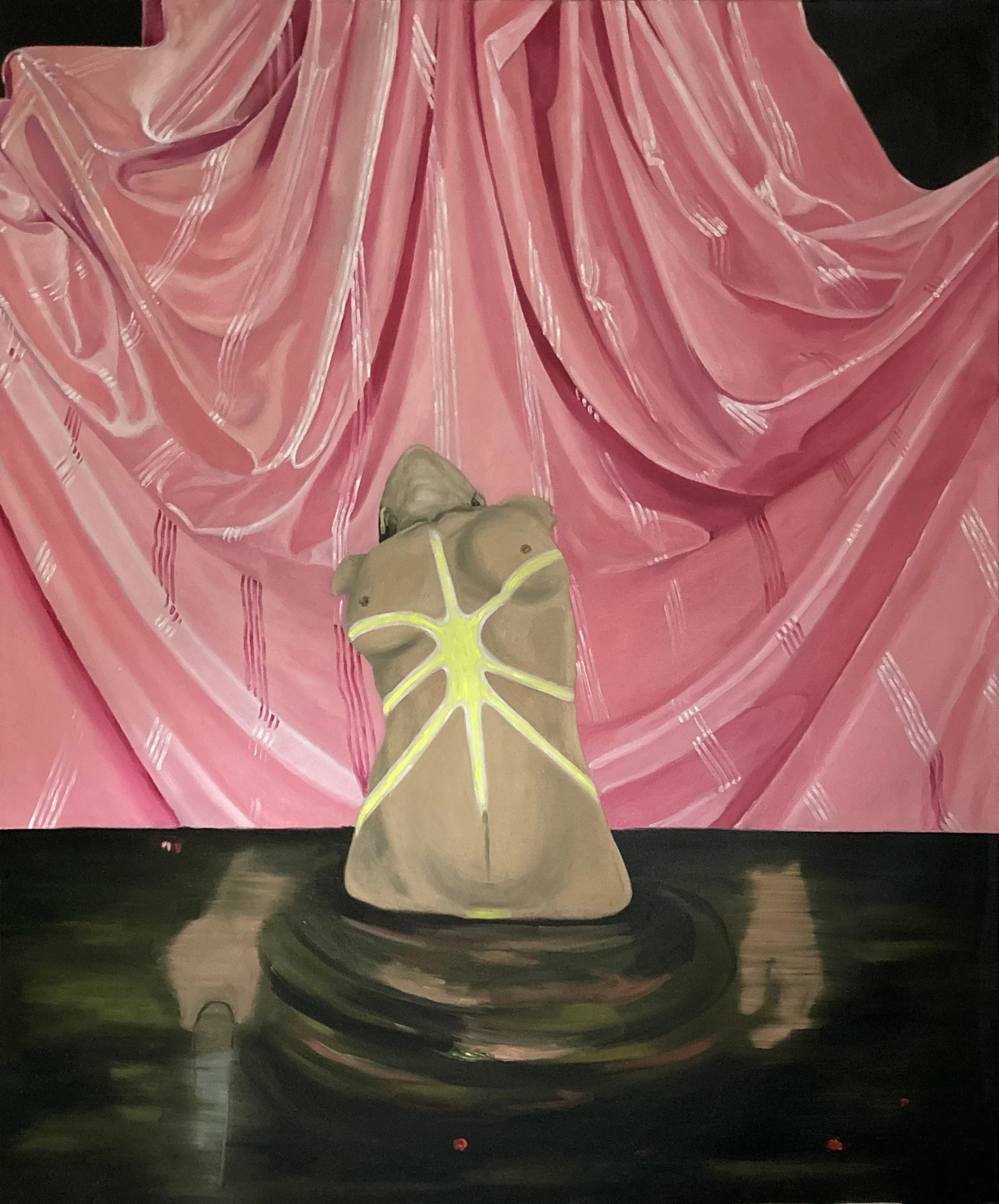
It is under the double seal of rebirth that Wahib Chehata bean his career as an artist. After having practiced various professions related to artistic direction, developed his gaze in the publishing and production circles, he took the plunge in the early 2010s with a very clear vision of what his work should be. By relying on Renaissance painting, he wants to offer new paintings that are not simply images. What Renaissance artists and architects proposed at the turn of the 15th century through perspective, of the reappropriation of ancient subjects is to re-examine the place of the human in the conception we had of the world. The humanist thought that crossed all areas at that time is embodied in particular in questions of measurement. From astronomy to medicine, new methods are experimented, it is a matter of opening bodies or looking for answers in the cosmos. The parallel with the contemporary world justifies for the artist the use of one project to another of the most advanced techniques, in the service of a coherent project that now takes the forms of an anthropometry.
Through the ages and cultures, taking the measure of man has identified different meanings; it could be a matter of looking in its proportions for something divine, a very mathematical correctness as well as finding some signs of vice or crime. From Vitruvius' man drawn for Luca Pacioli's The Divine Proportion to the sustained physiognomony of Cesare Lombroso through the judicial identification method developed by Alphonse Bertillon, this research has of course influenced the ways of perceiving the body. For Wahib Chehata, it is less about defining the body of a particular individual than about considering the social body and ultimately the body of a crowd. These different shifts have been made gradually and we understand them even better by examining the way the artist works his images, composes them from a digital space. If the artist initially went through photography, he always assimilated his work to that of a painter, limiting the prints to a single copy and claiming above all a mental cosa, that is to say, according to Leonardo da Vinci's word a work of the mind. Integrating new tools as they develop, he has thus dealt with retouching software, 3D modeling as well as with Artificial Intelligence today.
It is possible to project many things into the faces presented by Wahib Chehata. The artist created his portraits virtually, assembling lines in order to stretch a screen at the time, to those who want to identify themselves. Made almost inaccessible under a lot of signs and ornaments, mainly assimilated to religions (Catholic or Islamic), the figures refer only to cultural avatars. We can well associate them with saints, martyrs, desirable or repulsive images, they function in reaction to a society. Wahib Chehata thus articulates two series of images in his new corpus; both individuals who are represented as characters, with their particular stories and their own characters, and crowds represented in motion in large polyptychs that evoke some historical or mythological episodes that we cannot identify even if they would seem familiar, archetypal to us. Peter Greenaway, who went from cinema to exhibition halls, had sought with the series of video works Obedience to make the biblical story of Abraham, Isaac and Ishmael felt by going to a purification in characterization. Wahib Chehata, fascinated by the possibilities of storytelling through the image follows the same path, he creates icons and develops imagery that transcends ordinary violence and in a way sacralizes it. To the movements of anonymous crowds relayed by the press with various legends, the artist substitutes for an absolute, anonymous, irrecoverable uprising.
Everything started with the slogan "Our desires are a mess" claimed in turn by feminist and LGBT movements. The charge of this watchword that inscribes the intimate in the political field and calls for a societal change marks the artist. By appropriating it in the series "Tes désirs font désordre", he intends to show a social body in contact with contradictory desires, a violent dissociation resulting in characters in full implosion. Wahib Chehata does not deny a search for the spectacular, in the sense that, as Debord proved, it is impossible to escape from it, but this one is nothing free; it accompanies the search for meaning. The traces of bullets in a marble support, sometimes on golden leaf panels, erects the stigma into a precious relic, displaces violence by following the canon of the Catholic religion or Andy Warhol. The almost lyrical outpourings of his crowds reflect a deep aspiration that has nothing material about it. The artist's digital work thus refers to a deeper and almost metaphysical aspiration; as if simulating the gravity of a body, the effect of an action and its reaction made it possible to identify some universal laws. The body declares the artist is the center of everything; and virtually it is a matter of moving it to understand how far it can go.
Carte Blanche
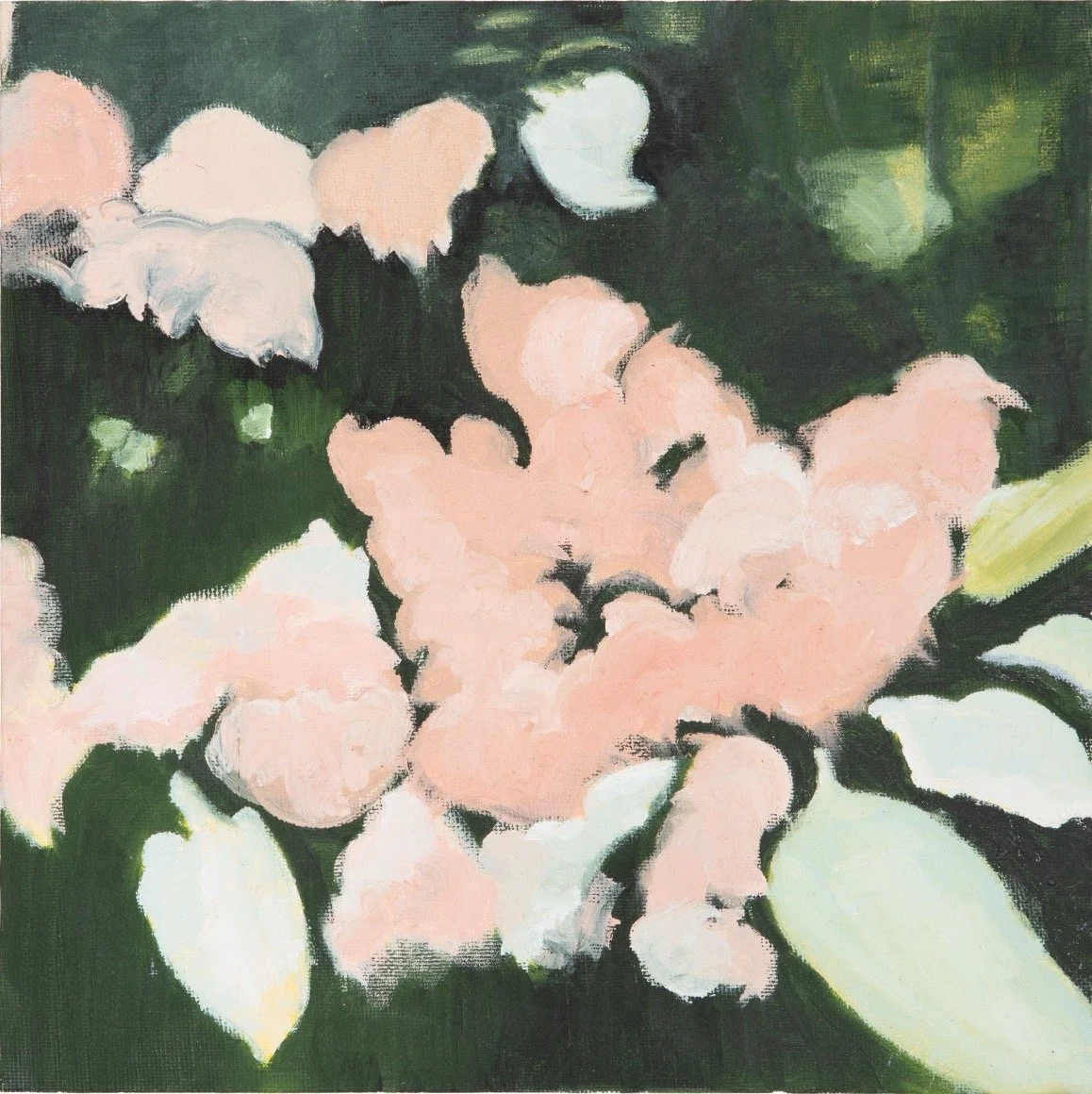
"The encounter with the world goes through the hands," Henri Guette recently wrote about Dalila Dalléas Bouzar. Everything in her house starts from the body and the gesture: a line that connects, a color that asserts itself, a space that transforms. Whether it's performances, embroidery or great paintings, the Algerian artist explores this fragile moment when contact is between oneself and the other, between memory and present, between sweetness and struggle. Her works draw a dividing line between intimacy and commitment, between reparation and reappropriation, in a history of painting that she constantly seeks to open, decompartmentalize, move. It is in this continuity that she imagines today a poetic carte blanche, designed as an interior living room where a reflection on the flesh, skin and bark unfolds.
With a carte blanche, Dalila Dalléas Bouzar forms a whole marked by poetry, sensitivity and beauty. The choice of guest artists was naturally imposed: Mbarka Amor, with whom she is preparing a collaboration for a future exhibition in Lissy, and Charlotte Yonga, met during a residence in Madagascar. Beyond their works, it is also their personality and commitment that motivated his desire to include them. Charlotte Yonga, photographer and videographer, develops a sensitive work around the portrait and the territory, the intimate and the social. His images, often nourished by long immersions, reveal the complexity of identities and the poetry of everyday life. Mbarka Amor, visual artist and performer, explores body memory, transmission and reparation rituals. His work, between sculpture, textile and installation, questions the way in which matter preserves traces, wounds and rebirths.
Brought together by Dalila Dalléas Bouzar, these three voices draw a landscape of emotions and resistance, a shared aurora where beauty becomes a way of taking a position in the world.
Summer Group Show
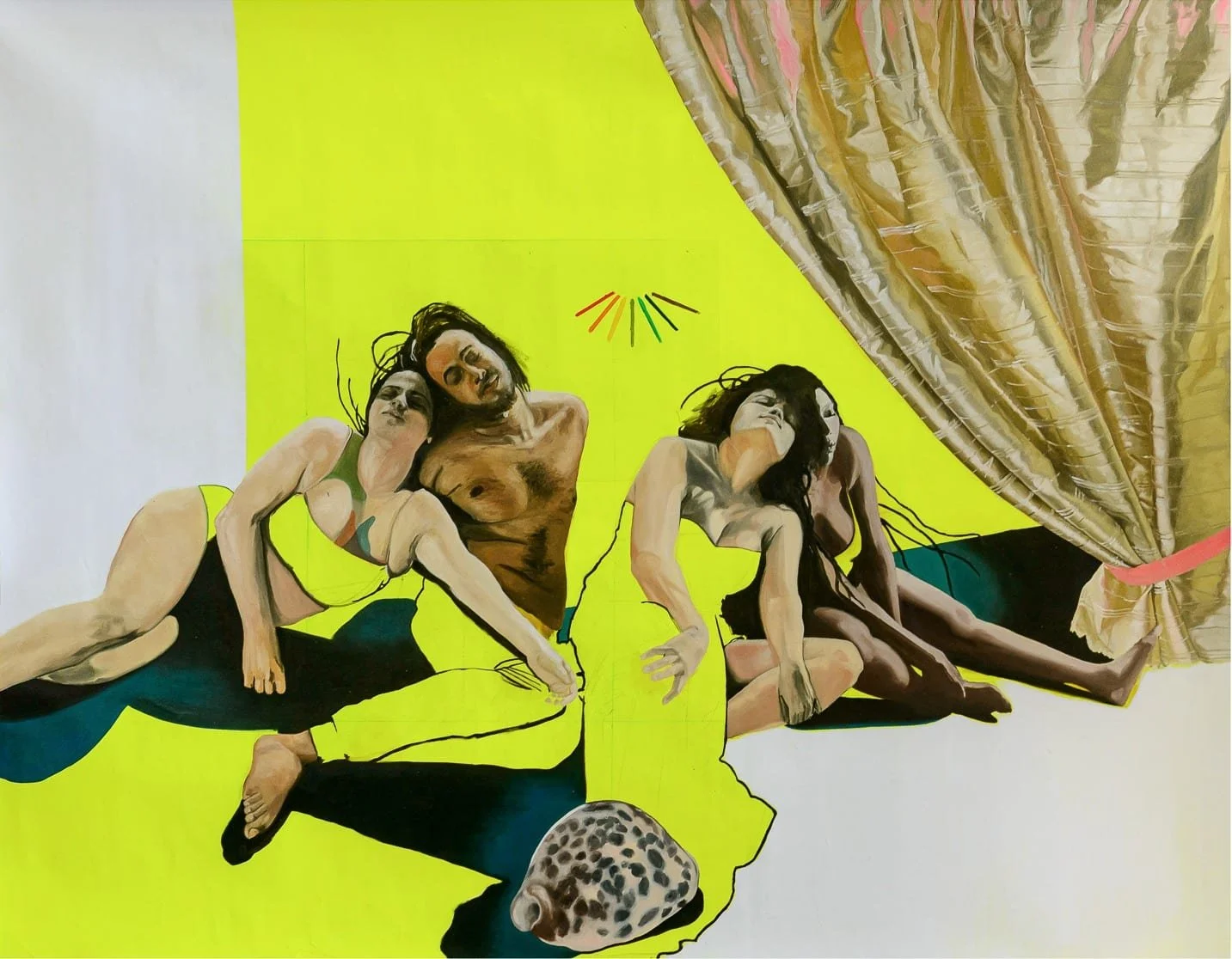
The Hamid Khellafi gallery changes its level for a summer. After the opening of its cycle dedicated to Algerian artists in February 2025, and the first solo exhibitions of Chemsedine Herriche, Adlane Samet and Mehdi Djelil, the gallery inaugurates a new stage with Summer Group Show, an evolving group exhibition. It marks a turning point in programming: a transition from the singular to the multiple, from the monograph to the multi-voice conversation.
Initially designed to last a year, the ambitious programming proposed by Hamid Khellafi around Algeria already promises to extend to 2026. If the gallery list likes to tell the importance of the first meetings made in Algiers during a first stay in 2024. The multiple rebounds, from one artist to another, led him to become aware of the richness and diversity of contemporary Algerian and Franco-Algerian practices. Without a medium limit and seeking to alternate generations, he thus shows a close-knit scene, rich in school effects and spontaneous dialogues. For him, it is a matter of helping to recognize a scene in full change, to create a passage. Because if several Franco-Algerian artists have been able to find their place on the Parisian rails highly assuming their double heritage, few artists living and working in Algeria have been able to benefit from the same recognition. A persistent border effect, often more symbolic than geographical, still limits circulation. It is this gap that he intends to bridge: to present a more complete, more fluid panorama, made up of back and forth, echoes, resonances between generations, disciplines and territories.
From one level to another, the summer exhibition plays with the idea of platforms as if in a wink to the world of video games that Sara Sadik handles and which allows her to create a framework of listening and empathy. In Khtobtogone, she uses GTA to give voice to a young man to talk about his love life and his aspirations. A virile avatar in a virtual universe that allows you to free speech while playing with stereotypes and turning them around. This way of playing the cliché, of turning it around and also the one at work in the canvas Women of Algiers where Dalila Dalléas Bouzar reappropriates with a yellow that almost has the value of manifest Delacroix's painting. Soon in the honors of a monographic exhibition at the gallery (in October) the artist also presents a tapestry of the Vaisseau Infini ensemble presented in an installation she made for the Palais de Tokyo in 2023. The attention to materials and artisanal techniques, the desire to collaborate with seamstresses, upholsterers and embroiderers and to participate in an act of transmission was also important for Yassine Mekhnache who combines in her canvases the pigment and sequins, the work of the point, the line and the color. Represented by the gallery, the artist who works on large compositions where he plays from the surface and different strata of figurations can thus be brought closer to the oneirism of Mehdi Djelil already presented in May-June, rue Mazarine.
Painting, photography, video, sculpture, design, drawing: mediums respond to each other, styles assert themselves. The works testify to a country with multiple layers, a history to be constantly reconfigured, changing identities, often expressed between languages - Arabic, French, English, Berber - playing with what each allows to say, or to keep quiet. This cultural permeability, made possible by a more connected society and an increasingly visible artistic scene, opens up an abundant creative field of which Wahib Chehata, the guest artist of the group exhibition, is perfectly representative. Navigating between images, working both AI and retouching software and more traditional techniques, he seeks to create bridges between cultures, to bring together various sensitivities through disorder. We can in the same way through the staging of Maya Inès Touam and her use of polyptychs perceive the problem of dealing with distinct heritages and influences and managing to actualize them, to live with them. In the same spirit, Katia Kameli explores the nature and status of images, navigating the gaps between colonial and postcolonial eras, between official and vernacular photography, to create narratives that fully embrace complexity.
With this programming, Hamid Khellafi affirms a project undoubtedly among the most intimate of his career. Ready to invest in these artists, to accompany them in the art market, he intends to connect the shores of the Mediterranean, do his part towards the country of the summers of his childhood, create cultural exchanges beyond political or institutional logics. Sadek Rahim, a multidisciplinary artist who benefited from a large monographic exhibition at the Museum of Modern Art in Oran and co-founder of the Mediterranean Biennale of Contemporary Art of Oran, shares this concern to create international links and intercultural dialogues. Its variations on the carpets, appropriations and diversions, make it possible to talk about the circulation of objects and the way in which culture plays out and moves out of the markets.Summer Group Show is thus more than a summer hookup. It's a gesture of passage. A moving and open stage, thought of as a living laboratory. The exhibition evolves, transforms over the weeks, welcoming new works, playing with travel and surprise. It embodies a gallery in motion, listening to an artistic scene in full effervescence, clearly affirming a direction: that of living, connected, cross-border creation. That of a present that is already preparing for the future.
Biography
Dalila Dalléas Bouzar
Born in 1974
Lives and works in Bordeaux
Dalila Dalléas Bouzar is a Franco-Algerian artist whose practice spans painting, drawing, textiles, and performance. Her work explores questions of memory, history, identity, and representation, often revisiting colonial imagery and art historical references through a contemporary and critical lens. She develops a visual language that connects personal experience with broader collective narratives.
Portraiture is central to her practice, serving as a means to question visibility, power, and the construction of identity. Through her paintings, she reinterprets historical images and creates new forms of representation that challenge dominant visual traditions. Her work often engages with the body as a site of memory and resistance, where individual and collective histories intersect. She also draws on archival material and historical references to reframe how images circulate and are perceived across different cultural contexts.
In recent years, she has expanded her practice through collaborative and textile-based projects that involve craftsmanship and processes of transmission. These works reflect her interest in shared knowledge, material culture, and the role of making as a collective and political act, while reinforcing the importance of dialogue between past and present. Her practice continues to evolve toward more collective forms, where gesture, material, and memory become deeply interconnected.
EXHIBITIONS
2024
J’ai rêvé d’un autre monde, Institut du Monde Arabe, Tourcoing
2023
Les Oubliées, Musée National des Beaux-Arts d’Alger, Alger
Sorcières, Maison des Arts, Malakoff
2022
Dalila Dalléas Bouzar, Galerie Cécile Fakhoury, Abidjan
2021
Algérie mon amour, Institut du Monde Arabe, Paris
2020
Portraits de femmes, Galerie Cécile Fakhoury, Paris
2019
Elles, Musée National Eugène Delacroix, Paris
2018
Dalila Dalléas Bouzar, Centre d’Art Ygrec, Paris
2018
Dalila Dalléas Bouzar, Centre d’Art Ygrec, Paris
2017
Révolution, Frac Île-de-France, Paris
2016
Topographie de la terreur, La Colonie, Paris
2015
Dalila Dalléas Bouzar, Galerie Cécile Fakhoury, Abidjan
2014
Résistantes, Institut Français d’Alger, Alger
2013
Dalila Dalléas Bouzar, Galerie Isabelle Gounod, Paris
2012
Premières œuvres, Institut Français de Tlemcen, Tlemcen