
Exhibitions
Summer Group Show
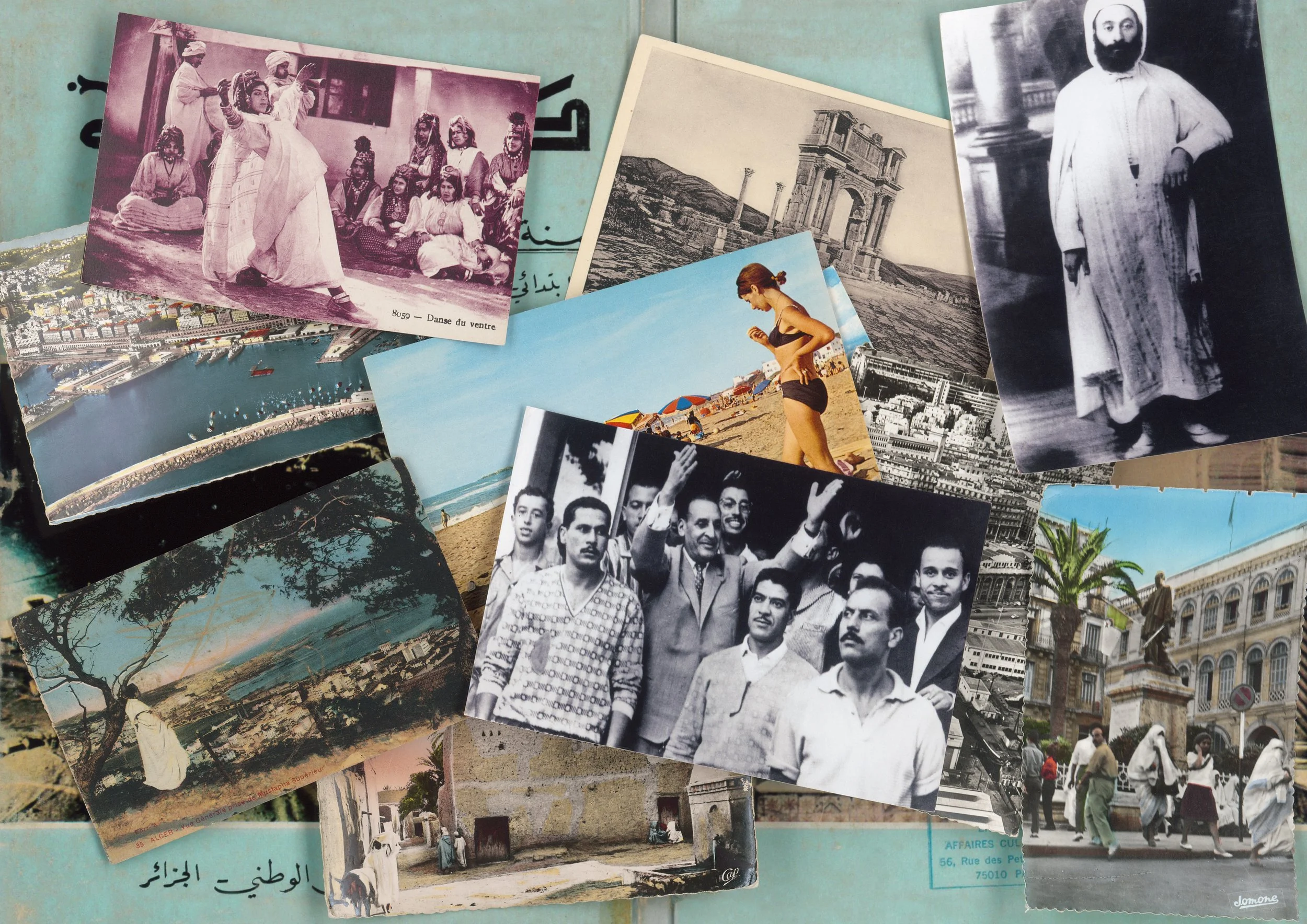
The Hamid Khellafi gallery changes its level for a summer. After the opening of its cycle dedicated to Algerian artists in February 2025, and the first solo exhibitions of Chemsedine Herriche, Adlane Samet and Mehdi Djelil, the gallery inaugurates a new stage with Summer Group Show, an evolving group exhibition. It marks a turning point in programming: a transition from the singular to the multiple, from the monograph to the multi-voice conversation.
Initially designed to last a year, the ambitious programming proposed by Hamid Khellafi around Algeria already promises to extend to 2026. If the gallery list likes to tell the importance of the first meetings made in Algiers during a first stay in 2024. The multiple rebounds, from one artist to another, led him to become aware of the richness and diversity of contemporary Algerian and Franco-Algerian practices. Without a medium limit and seeking to alternate generations, he thus shows a close-knit scene, rich in school effects and spontaneous dialogues. For him, it is a matter of helping to recognize a scene in full change, to create a passage. Because if several Franco-Algerian artists have been able to find their place on the Parisian rails highly assuming their double heritage, few artists living and working in Algeria have been able to benefit from the same recognition. A persistent border effect, often more symbolic than geographical, still limits circulation. It is this gap that he intends to bridge: to present a more complete, more fluid panorama, made up of back and forth, echoes, resonances between generations, disciplines and territories.
From one level to another, the summer exhibition plays with the idea of platforms as if in a wink to the world of video games that Sara Sadik handles and which allows her to create a framework of listening and empathy. In Khtobtogone, she uses GTA to give voice to a young man to talk about his love life and his aspirations. A virile avatar in a virtual universe that allows you to free speech while playing with stereotypes and turning them around. This way of playing the cliché, of turning it around and also the one at work in the canvas Women of Algiers where Dalila Dalléas Bouzar reappropriates with a yellow that almost has the value of manifest Delacroix's painting. Soon in the honors of a monographic exhibition at the gallery (in October) the artist also presents a tapestry of the Vaisseau Infini ensemble presented in an installation she made for the Palais de Tokyo in 2023. The attention to materials and artisanal techniques, the desire to collaborate with seamstresses, upholsterers and embroiderers and to participate in an act of transmission was also important for Yassine Mekhnache who combines in her canvases the pigment and sequins, the work of the point, the line and the color. Represented by the gallery, the artist who works on large compositions where he plays from the surface and different strata of figurations can thus be brought closer to the oneirism of Mehdi Djelil already presented in May-June, rue Mazarine.
Painting, photography, video, sculpture, design, drawing: mediums respond to each other, styles assert themselves. The works testify to a country with multiple layers, a history to be constantly reconfigured, changing identities, often expressed between languages - Arabic, French, English, Berber - playing with what each allows to say, or to keep quiet. This cultural permeability, made possible by a more connected society and an increasingly visible artistic scene, opens up an abundant creative field of which Wahib Chehata, the guest artist of the group exhibition, is perfectly representative. Navigating between images, working both AI and retouching software and more traditional techniques, he seeks to create bridges between cultures, to bring together various sensitivities through disorder. We can in the same way through the staging of Maya Inès Touam and her use of polyptychs perceive the problem of dealing with distinct heritages and influences and managing to actualize them, to live with them. In the same spirit, Katia Kameli explores the nature and status of images, navigating the gaps between colonial and postcolonial eras, between official and vernacular photography, to create narratives that fully embrace complexity.
With this programming, Hamid Khellafi affirms a project undoubtedly among the most intimate of his career. Ready to invest in these artists, to accompany them in the art market, he intends to connect the shores of the Mediterranean, do his part towards the country of the summers of his childhood, create cultural exchanges beyond political or institutional logics. Sadek Rahim, a multidisciplinary artist who benefited from a large monographic exhibition at the Museum of Modern Art in Oran and co-founder of the Mediterranean Biennale of Contemporary Art of Oran, shares this concern to create international links and intercultural dialogues. Its variations on the carpets, appropriations and diversions, make it possible to talk about the circulation of objects and the way in which culture plays out and moves out of the markets.Summer Group Show is thus more than a summer hookup. It's a gesture of passage. A moving and open stage, thought of as a living laboratory. The exhibition evolves, transforms over the weeks, welcoming new works, playing with travel and surprise. It embodies a gallery in motion, listening to an artistic scene in full effervescence, clearly affirming a direction: that of living, connected, cross-border creation. That of a present that is already preparing for the future.
Hier revient et je l’entends
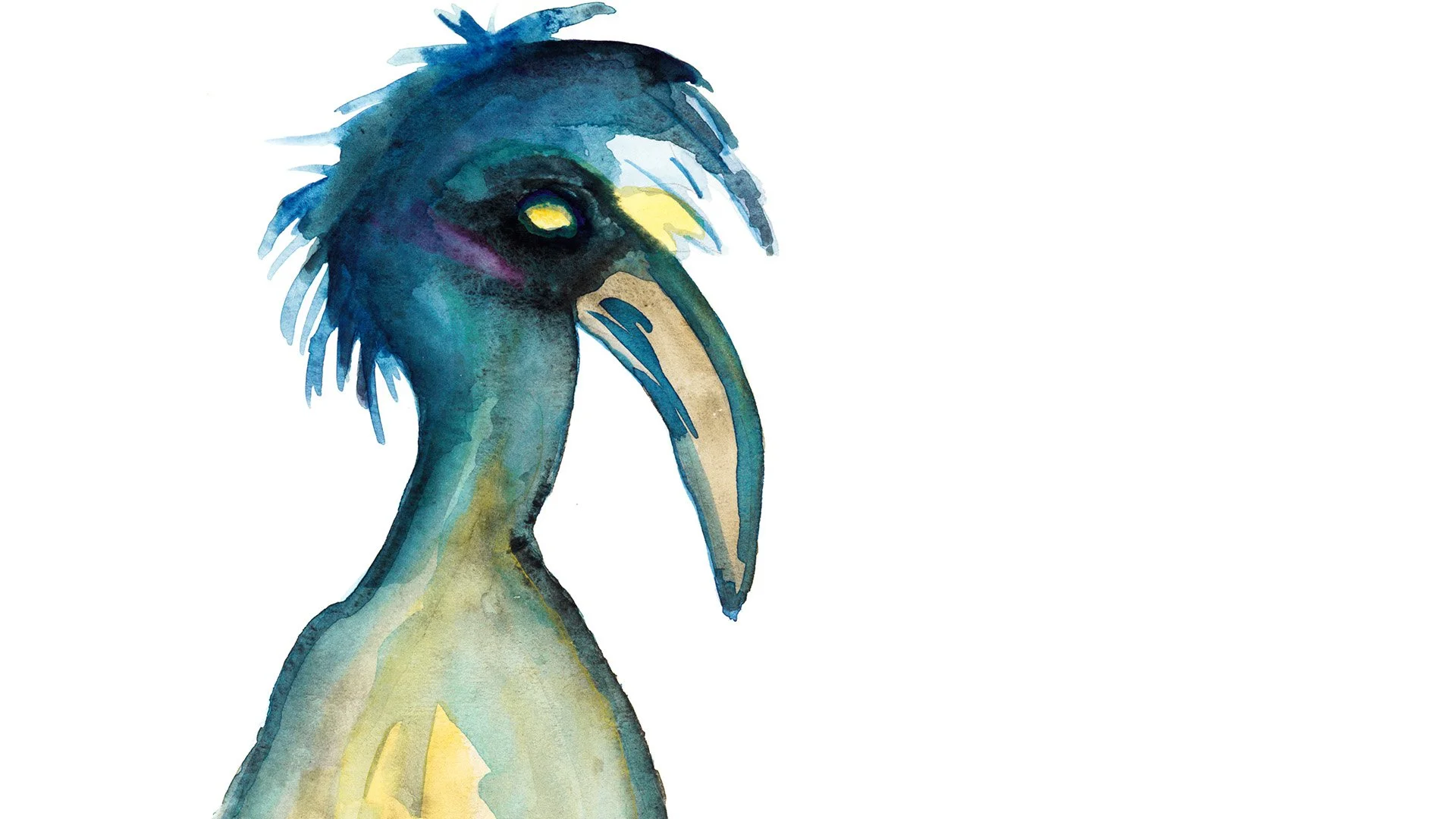
Hier revient et je l’entends continues Katia Kameli’s exploration of memory, transmission, and the fragmented narratives that shape both individual and collective histories. Through a body of films, installations, and documentary forms, the artist investigates the invisible circulations between past and present—where voices persist, transform, and re-emerge.
The title itself suggests a non-linear understanding of time, in which yesterday never fully disappears but returns to inhabit the present in the form of echoes, traces, and silences. The exhibition gives space to these resonances: forgotten stories, displaced languages, and narratives that exist on the margins of dominant histories. Drawing on archives, testimonies, and gestures, Kameli recomposes materials to create new, open-ended narrative forms.
Within the exhibition, image and sound play a central role. Voices—often multiple—overlap and respond to one another, forming a polyphony in which no single version prevails. This process of editing and displacement questions how histories are constructed, transmitted, and continuously reshaped across time and context.
Hier revient et je l’entends thus offers both an intimate and political experience. By foregrounding marginalized or overlooked narratives, the artist invites viewers to reconsider the forms of memory that shape us. The exhibition becomes a space of listening, encouraging attention to what persists, what resists, and what continues, despite everything, to be heard.
Biography
Katia Kameli
Born in 1973
Lives and works in Paris
Katia Kameli is a Franco-Algerian artist whose multidisciplinary practice encompasses film, photography, installation, and publishing. Drawing on archives, literature, cinema, and oral traditions, she explores the circulation of images, stories, and cultural narratives across geographical and historical boundaries. Her work examines how identities and collective memories are constructed, transmitted, and transformed over time.
At the heart of her practice lies a sustained interest in the relationships between Europe, North Africa, and the Mediterranean. Navigating between colonial and postcolonial histories, official archives and vernacular forms of representation, Kameli creates layered narratives that challenge singular readings of history and culture. Rather than offering fixed interpretations, her works embrace complexity, multiplicity, and the coexistence of different perspectives.
Through films, installations, and research-based projects, Kameli reactivates overlooked histories and questions the role images play in shaping collective imagination. Her acclaimed long-term project Le Roman algérien explores the visual and political narratives that have influenced Algeria from independence to the present day. Widely exhibited internationally, her work proposes alternative ways of understanding cultural heritage, memory, and belonging in an interconnected world.
EXHIBITIONS
2024
Le Cantique des oiseaux, Centre Pompidou-Metz, Metz
2023
Stream of Stories, Villa Empain – Fondation Boghossian, Bruxelles
Le Roman algérien, Mucem, Marseille
2022
What Language Do You Speak, Stranger?, De Appel, Amsterdam
2021
Le Roman algérien, Frac Provence-Alpes-Côte d’Azur, Marseille
2020
She Rekindled the Vividness of the Past, Mosaic Rooms, Londres
2019
Le Roman algérien, Centre Pompidou, Paris
2018
Ya Rayi!, Galerie Eric Dupont, Paris
2018
Entropie, AKAA Art Fair, Galerie Dominique Fiat, Fondation Montresso, Paris
2017
Stream of Stories, Darat al Funun, Amman
2016
Le Roman algérien, Centre d’Art
2016
Le Roman algérien, Centre d’Art Contemporain, Genève
2015
Ya Rayi!, Fondation Kadist, Paris
2014
Bledi, un voyage dans l’Algérie contemporaine, Institut Français d’Alger, Alger
2013
Le Roman algérien, Galerie Eric Dupont, Paris
2012
Stream of Stories, Centre d’Art Santa Mònica, Barcelone