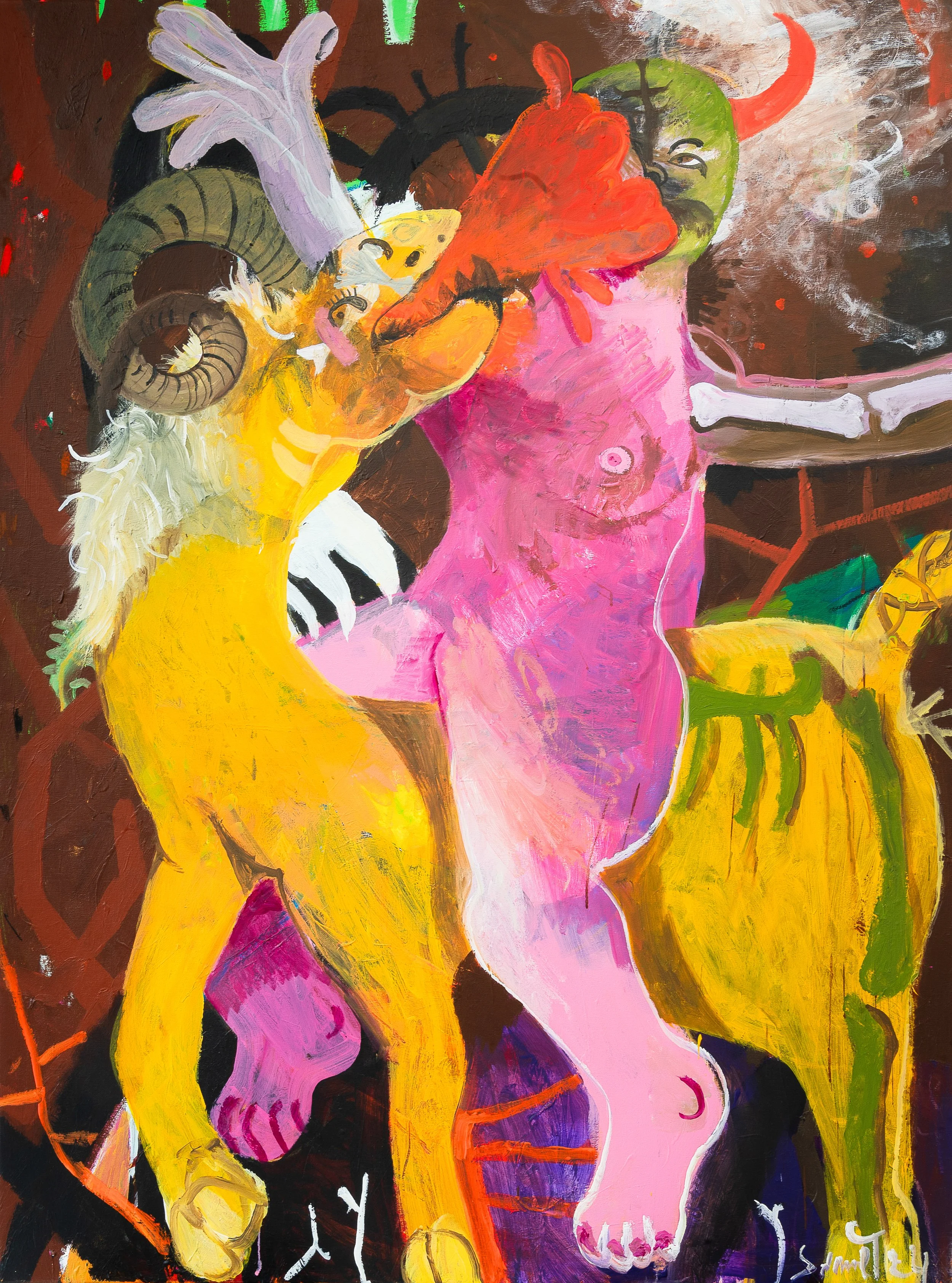
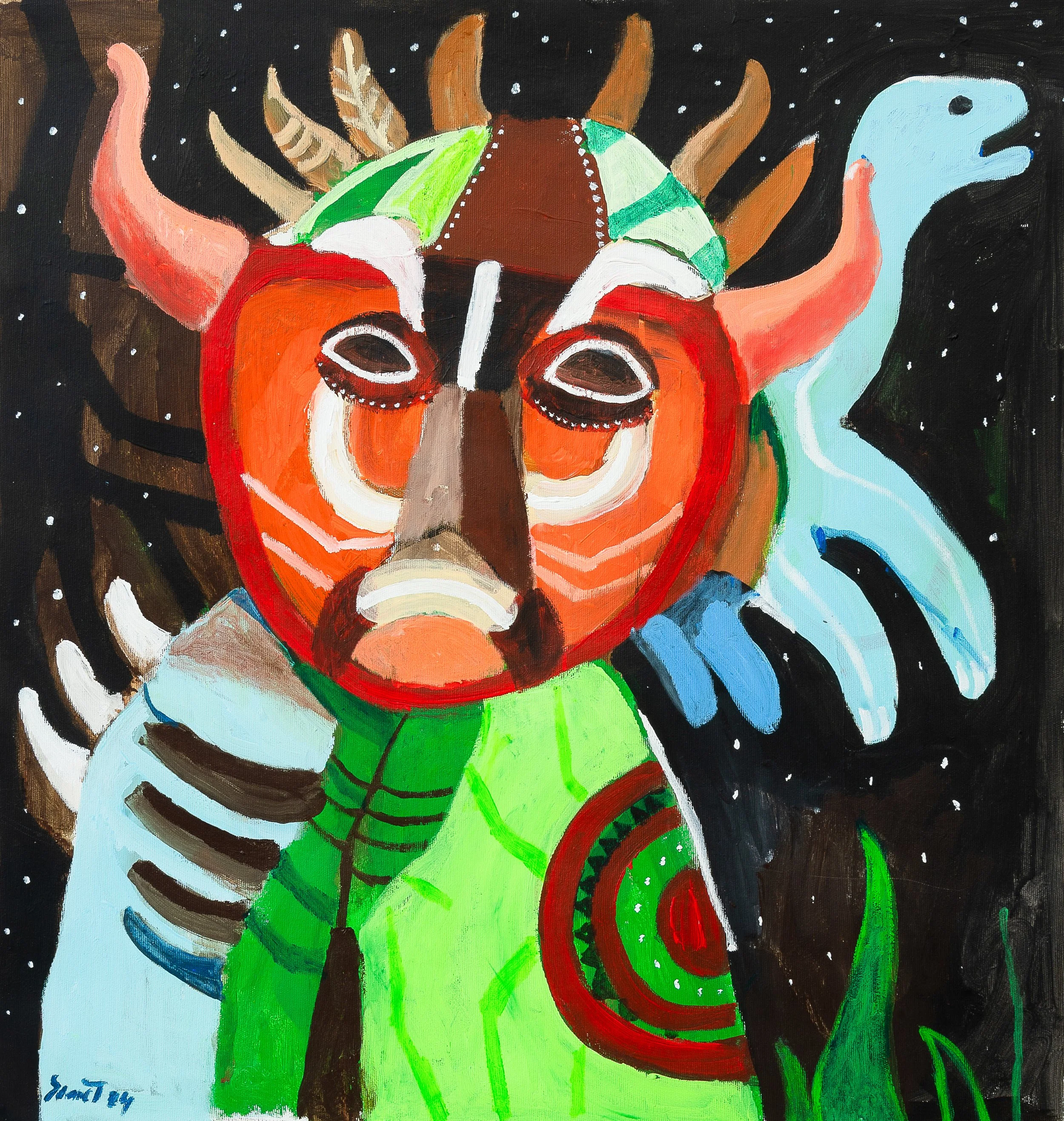
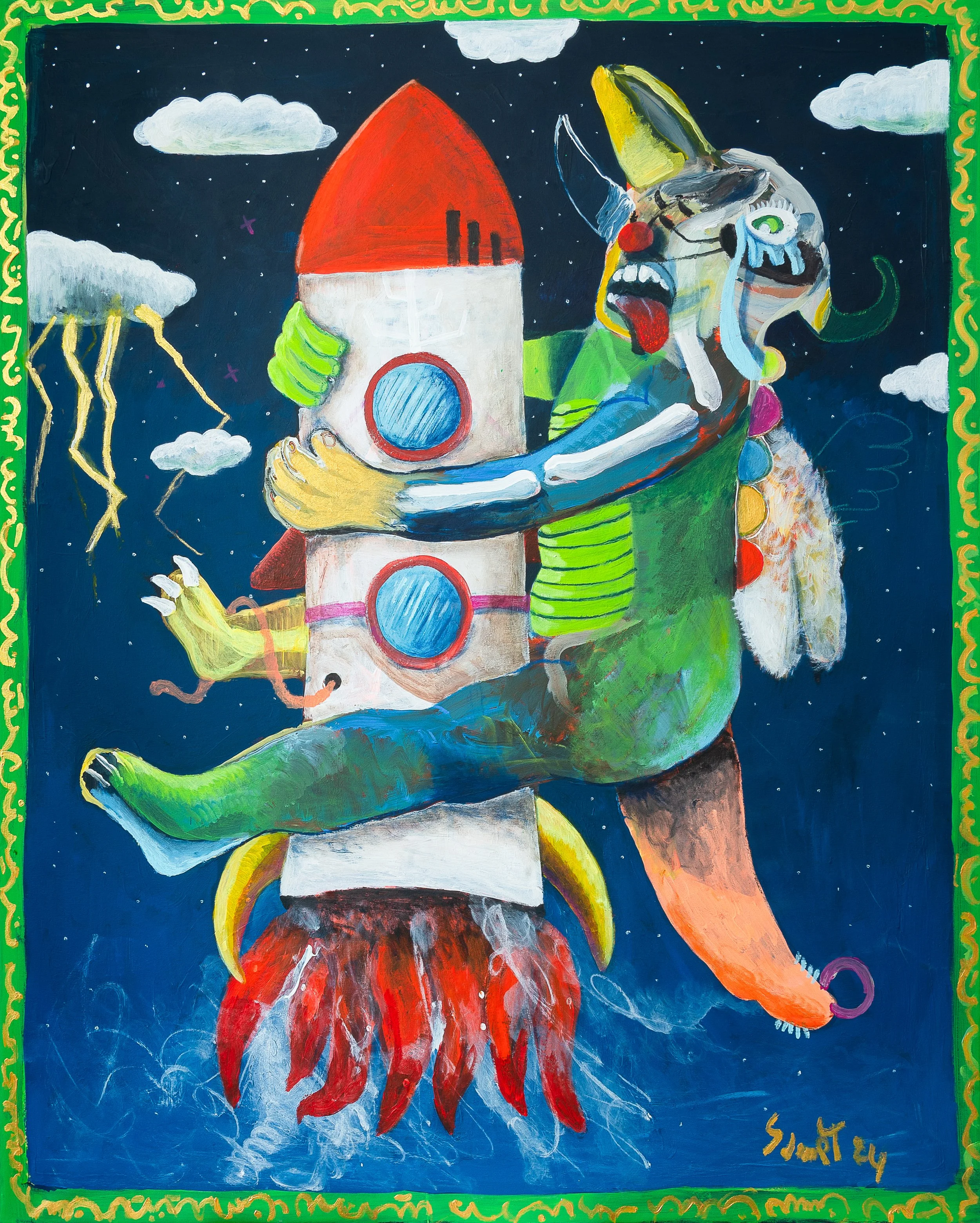
In the first gesture, something is decided that has no shape yet. It’s a color, an energy, a way of rubbing, tapping, pressing, brushing. These are raw emotions. The term is important. Adlane Samet has no plan when he starts a painting. He determines the format and the technique, charcoal or acrylic, which in turn will give rise to subjects, figures, something of a dramaturgy.
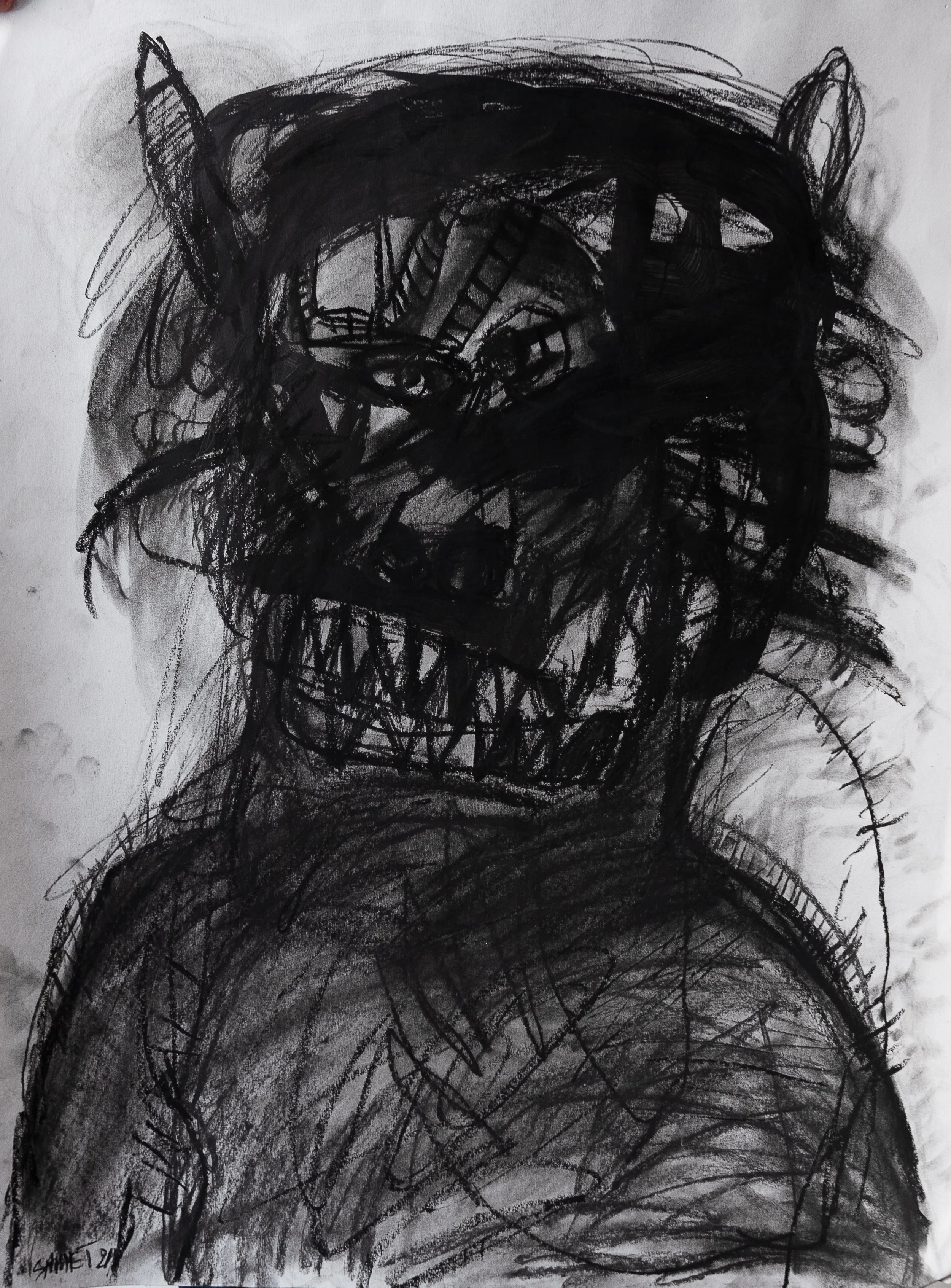
The small formats are more suited to portraits and allow him to create a gallery of creatures, with their horns and teeth, eyes and hands, all exaggerated and easily identifiable. In the charcoal drawings Fragile, where each line overlaps and the density of the blacks conveys a buzzing of ideas, one can recognize something of the figure of the Minotaur, the hybrid of man and animal. But in contrast to how Picasso treated it, full of force and brutality, what we recognize here is a cry, a pain. The unease comes not so much from the monster itself, but from what moves through and stirs it. In his short story The House of Asterion, Borges reverses our perception of the myth and leads us to see beyond the Minotaur, where the monstrous and the violent reside.
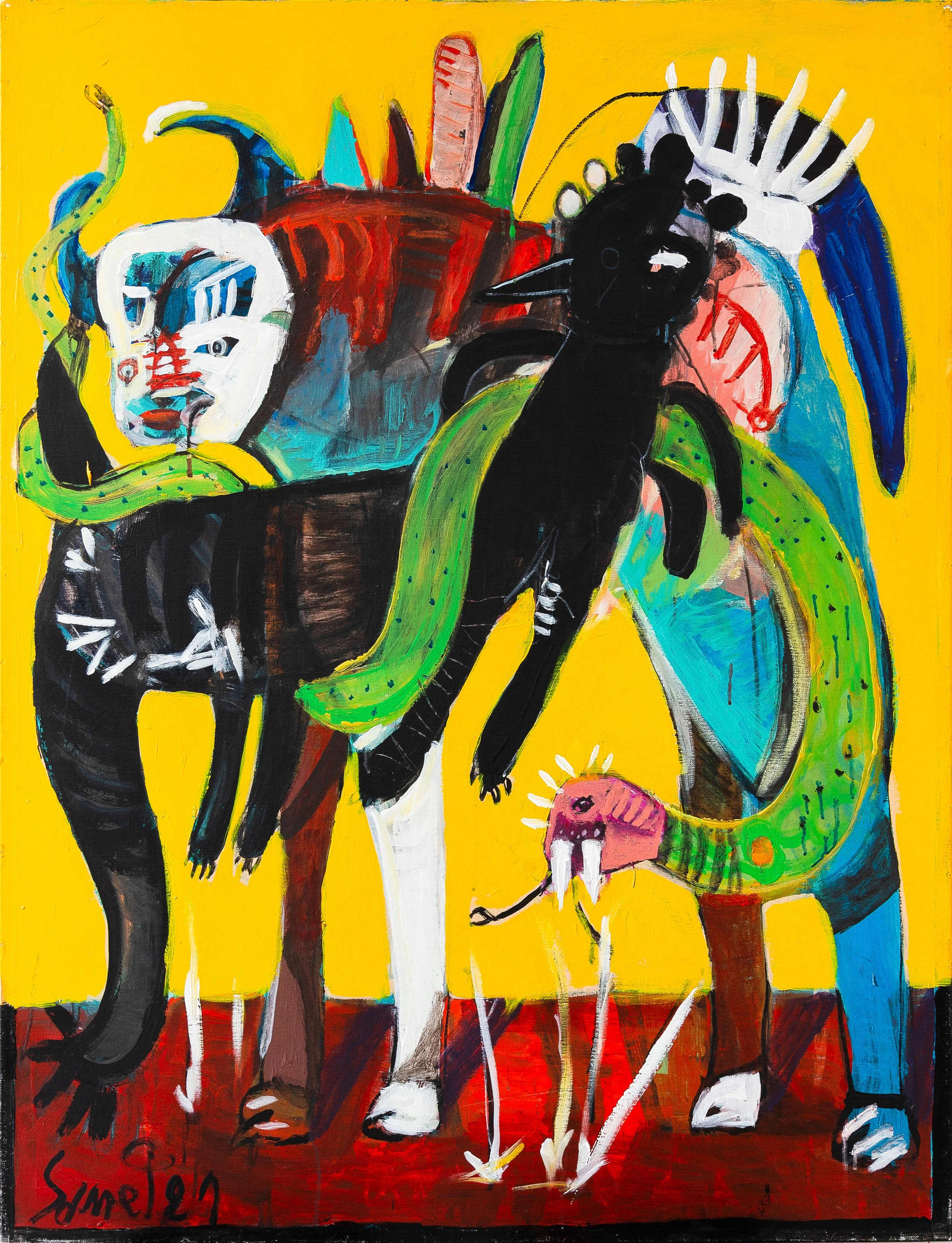
Adlane Samet grew up in Algeria during the 1990s, and the violence he witnessed during those dark years resonates in his work. The scenes he orchestrates in his canvas paintings bear evocative titles such as The Tragedy, The Cycle of Greed, The Mad Puppeteer. It is not unlikely to see interpretations of history or current events in them. The rich symbolism also recalls Goya, Bosch, and a certain tradition of depicting the madness of the world as it goes.
The artist willingly speaks of a form of fatalism regarding a painting like A Night Like No Other, where a figure on a slide leading to the abyss seems unable to escape its fate. Painting is a form of exorcism; a way of rising again despite everything, of taking control. A hand so present is expressive in his works.
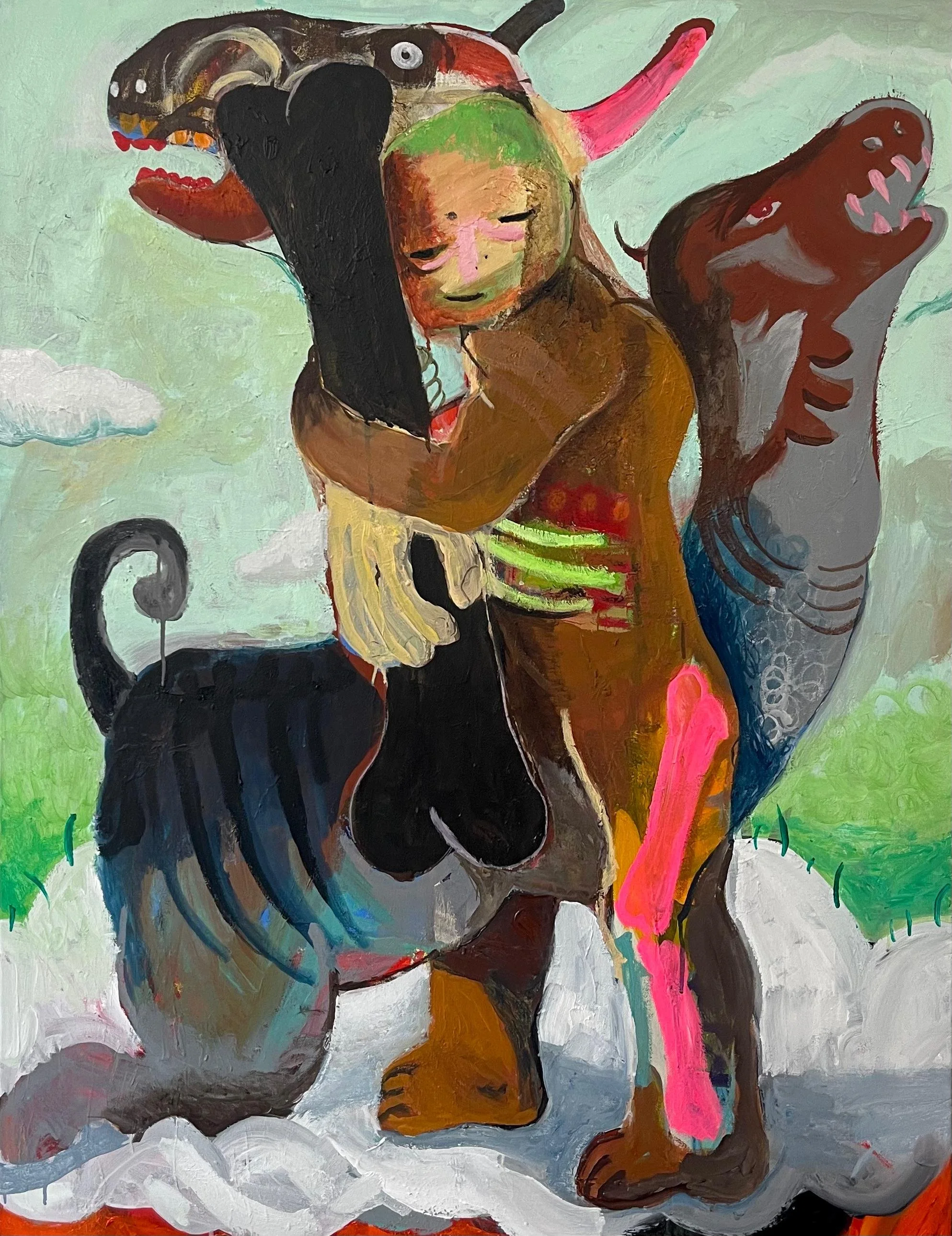
In a way, one could say that Adlane Samet paints down to the bone. Different parts of the skeleton of his figures appear beneath the color, like flesh laid bare. The bone, Adma, which gives its name to the exhibition, becomes a form of signature and self-affirmation after having long been used as an insulting nickname. The bone to which the figure clings in Admane represents a way of returning to the essentials, of shedding the superfluous or over-intellectualization. In his images, there are always only simple gestures capable of leaving a lasting mark in memory; it’s about taking, giving, grabbing, and being grabbed... In this, Adlane Samet works, without claiming it, towards a form of mythology, a set of figures that haunt us day and night, allowing us to explain the world and put it at a distance.