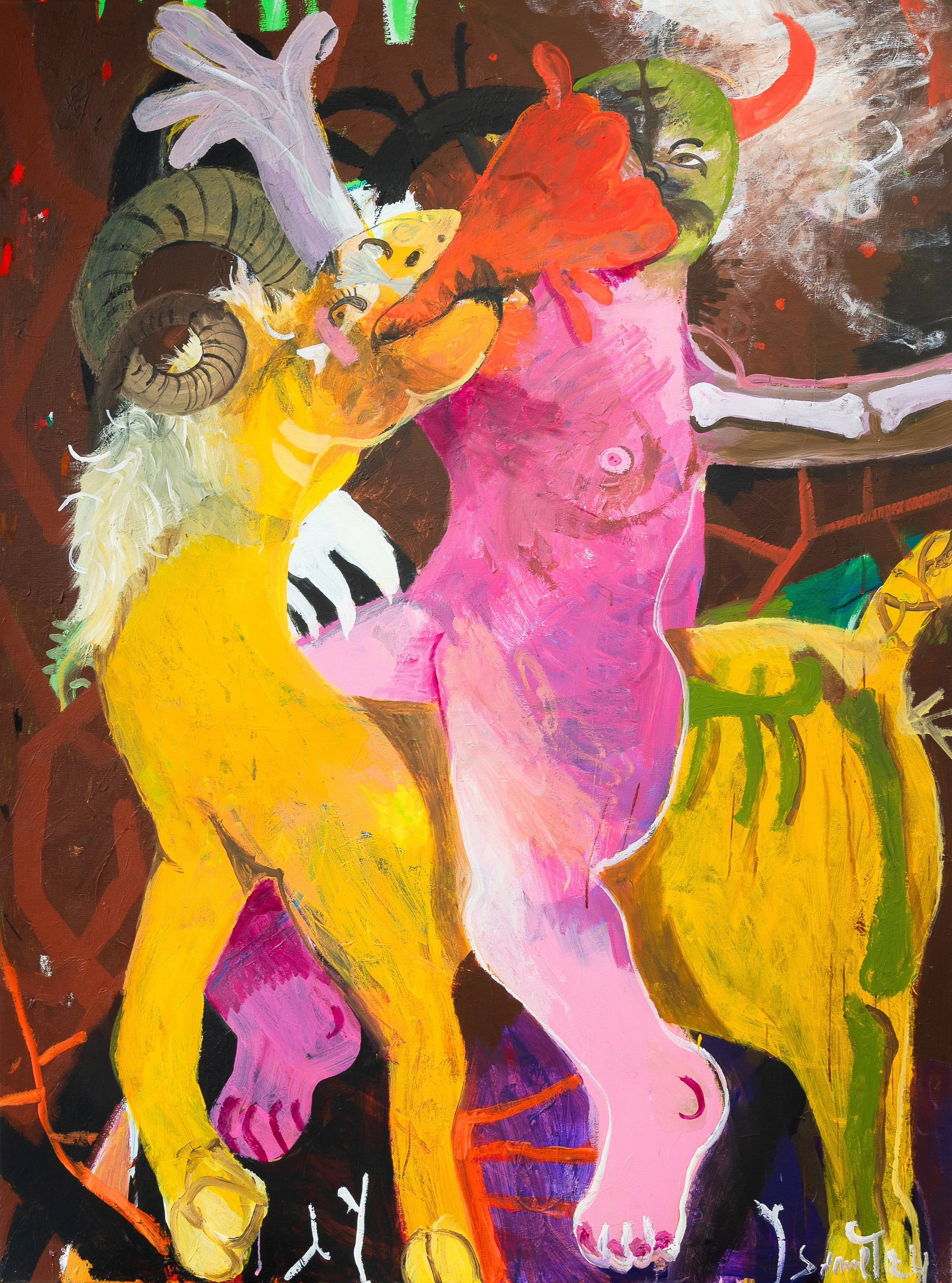
Next Level. The Hamid Khellafi gallery changes its level for a summer. After the opening of its cycle dedicated to Algerian artists in February 2025, and the first solo exhibitions of Chemsedine Herriche, Adlane Samet and Mehdi Djelil, the gallery inaugurates a new stage with Summer Group Show, an evolving group exhibition. It marks a turning point in programming: a transition from the singular to the multiple, from the monograph to the multi-voice conversation.
Initially designed to last a year, the ambitious programming proposed by Hamid Khellafi around Algeria already promises to extend to 2026. If the gallery list likes to tell the importance of the first meetings made in Algiers during a first stay in 2024. The multiple rebounds, from one artist to another, led him to become aware of the richness and diversity of contemporary Algerian and Franco-Algerian practices. Without a medium limit and seeking to alternate generations, he thus shows a close-knit scene, rich in school effects and spontaneous dialogues. For him, it is a matter of helping to recognize a scene in full change, to create a passage. Because if several Franco-Algerian artists have been able to find their place on the Parisian rails highly assuming their double heritage, few artists living and working in Algeria have been able to benefit from the same recognition. A persistent border effect, often more symbolic than geographical, still limits circulation. It is this gap that he intends to bridge: to present a more complete, more fluid panorama, made up of back and forth, echoes, resonances between generations, disciplines and territories.
From one level to another, the summer exhibition plays with the idea of platforms as if in a wink to the world of video games that Sara Sadik handles and which allows her to create a framework of listening and empathy. In Khtobtogone, she uses GTA to give voice to a young man to talk about his love life and his aspirations.
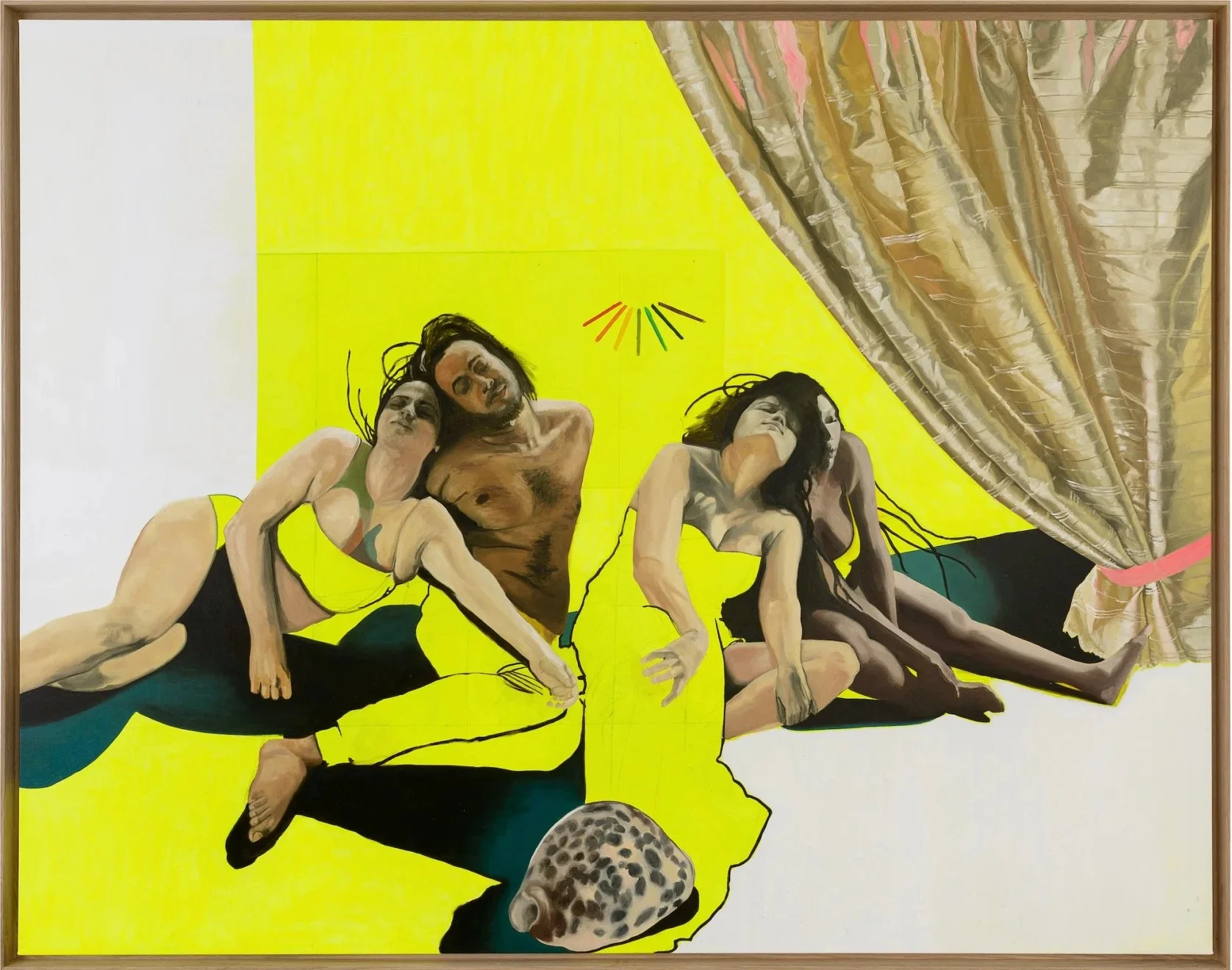
A virile avatar in a virtual universe that allows you to free speech while playing with stereotypes and turning them around. This way of playing the cliché, of turning it around and also the one at work in the canvas Women of Algiers where Dalila Dalléas Bouzar reappropriates with a yellow that almost has the value of manifest Delacroix's painting. Soon in the honors of a monographic exhibition at the gallery (in October) the artist also presents a tapestry of the Vaisseau Infini ensemble presented in an installation she made for the Palais de Tokyo in 2023.
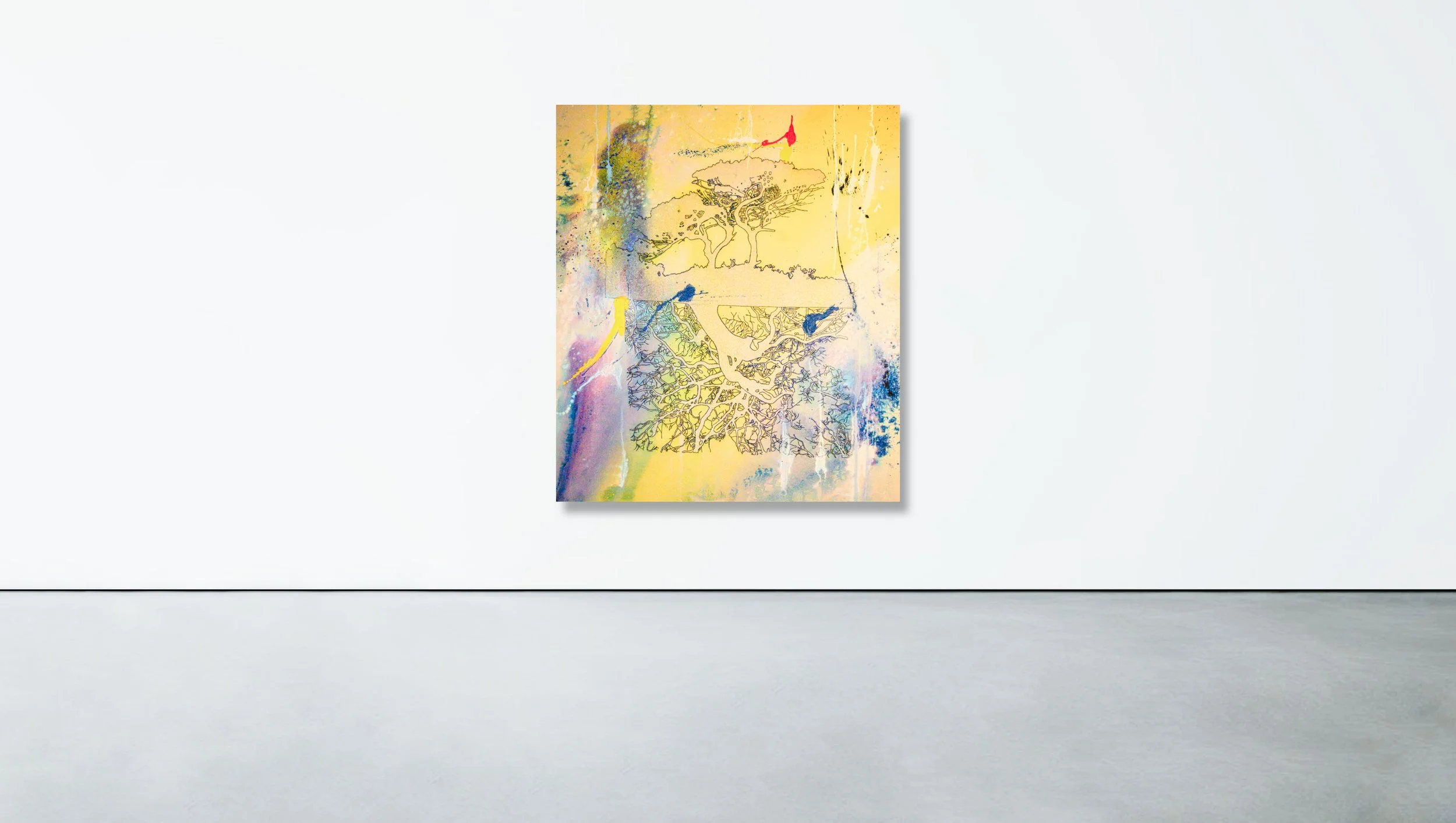
The attention to materials and artisanal techniques, the desire to collaborate with seamstresses, upholsterers and embroiderers and to participate in an act of transmission was also important for Yassine Mekhnache who combines in her canvases the pigment and sequins, the work of the point, the line and the color. Represented by the gallery, the artist who works on large compositions where he plays from the surface and different strata of figurations can thus be brought closer to the oneirism of Mehdi Djelil already presented in May-June, rue Mazarine.
Painting, photography, video, sculpture, design, drawing: mediums respond to each other, styles assert themselves.
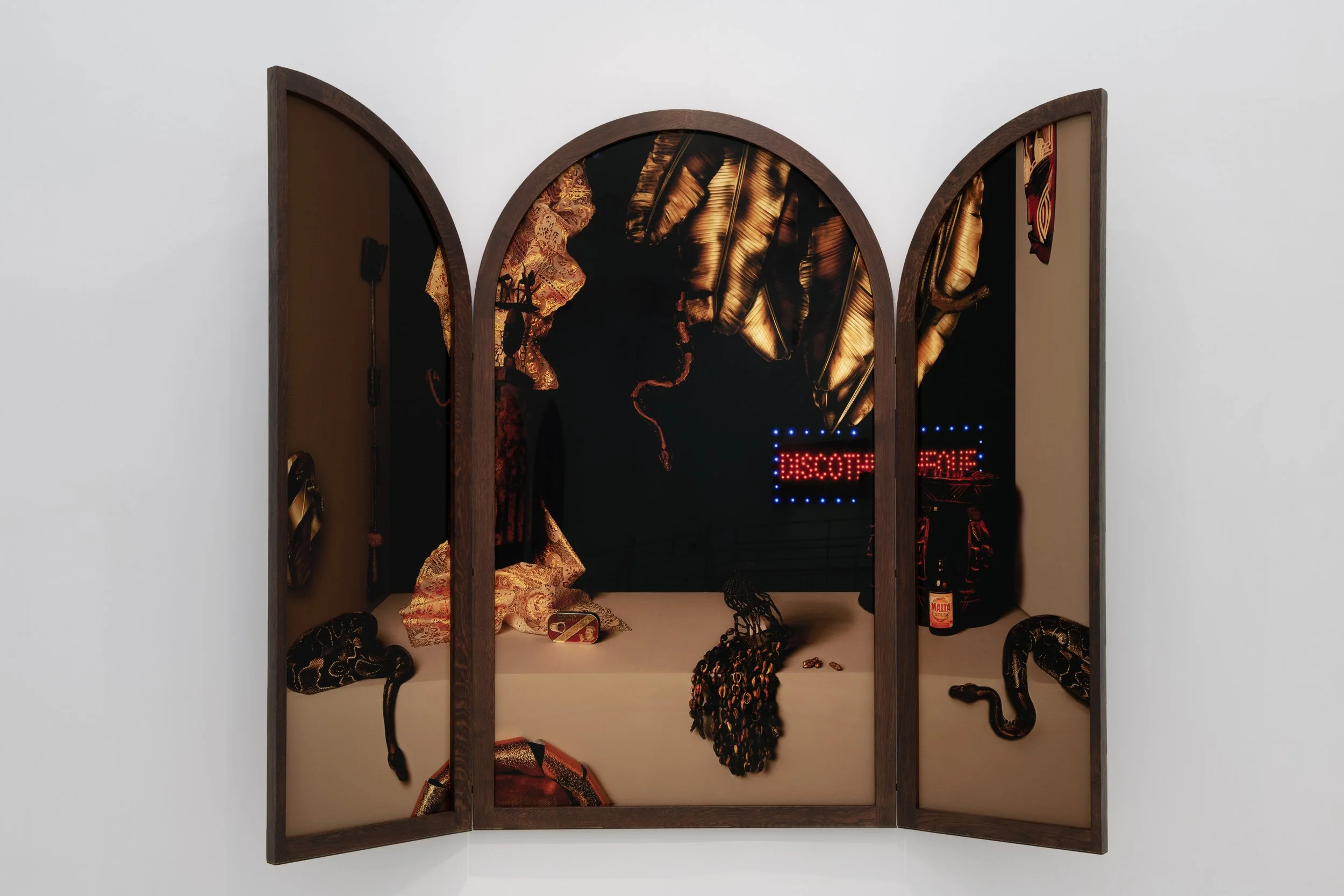
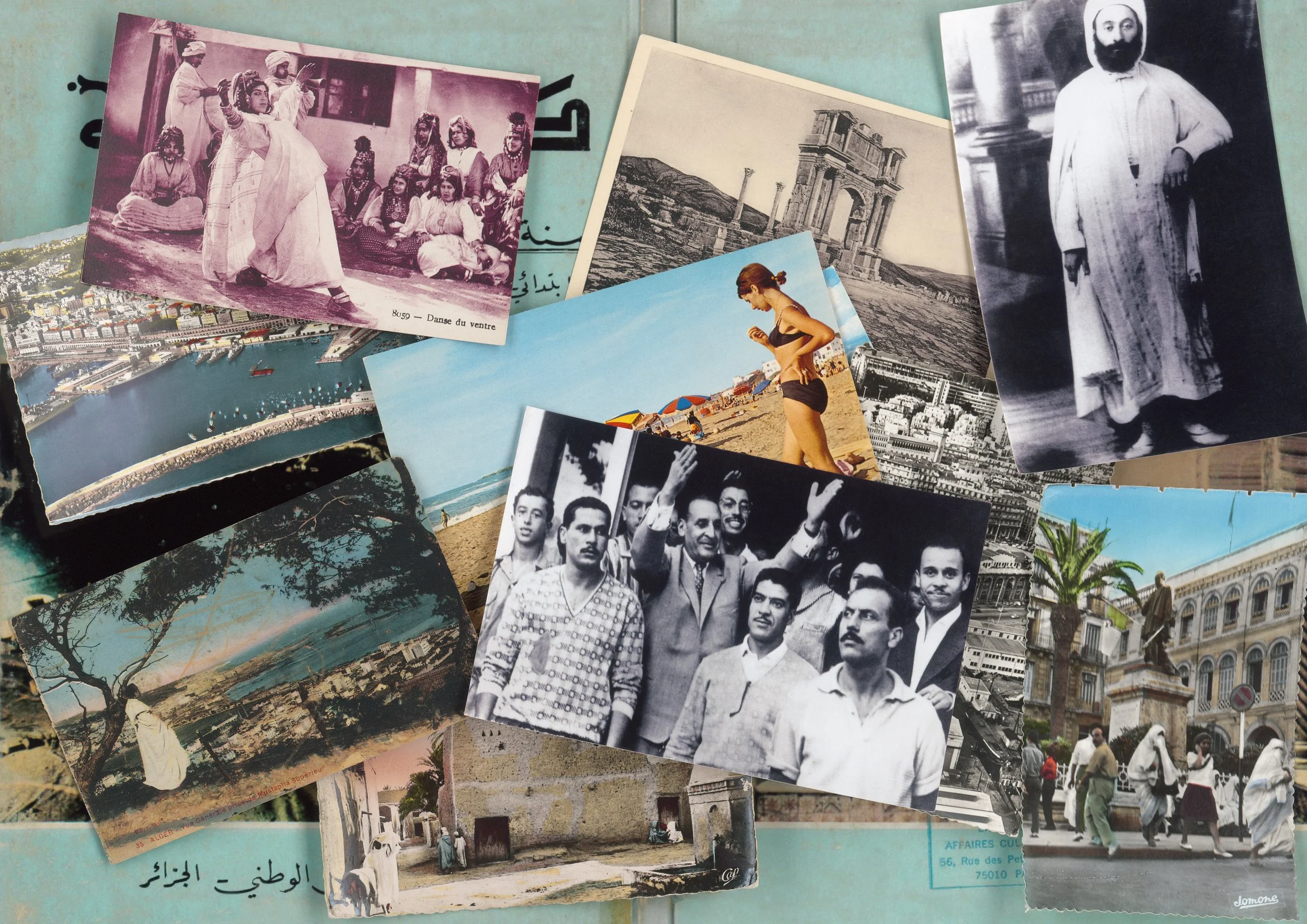
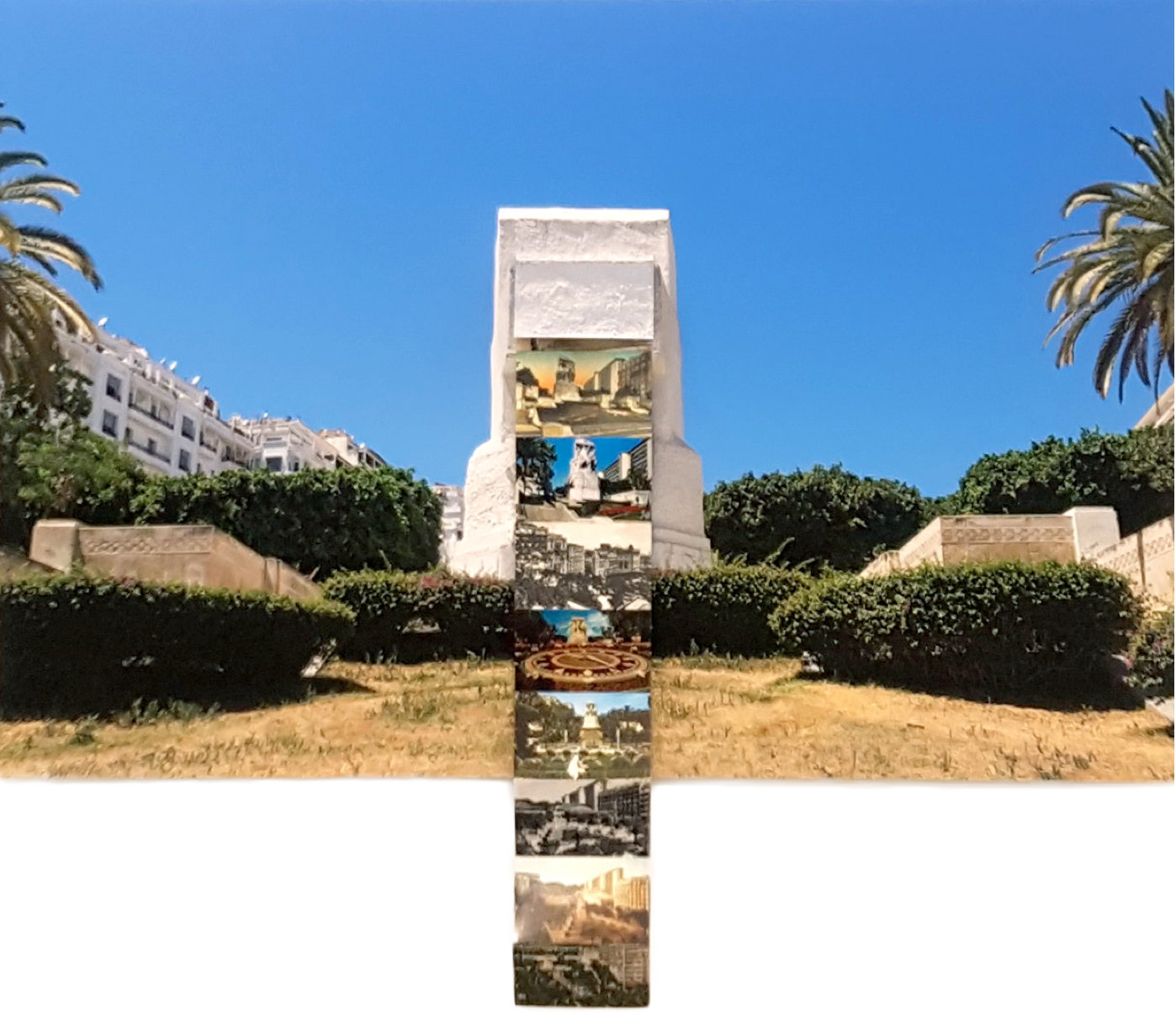
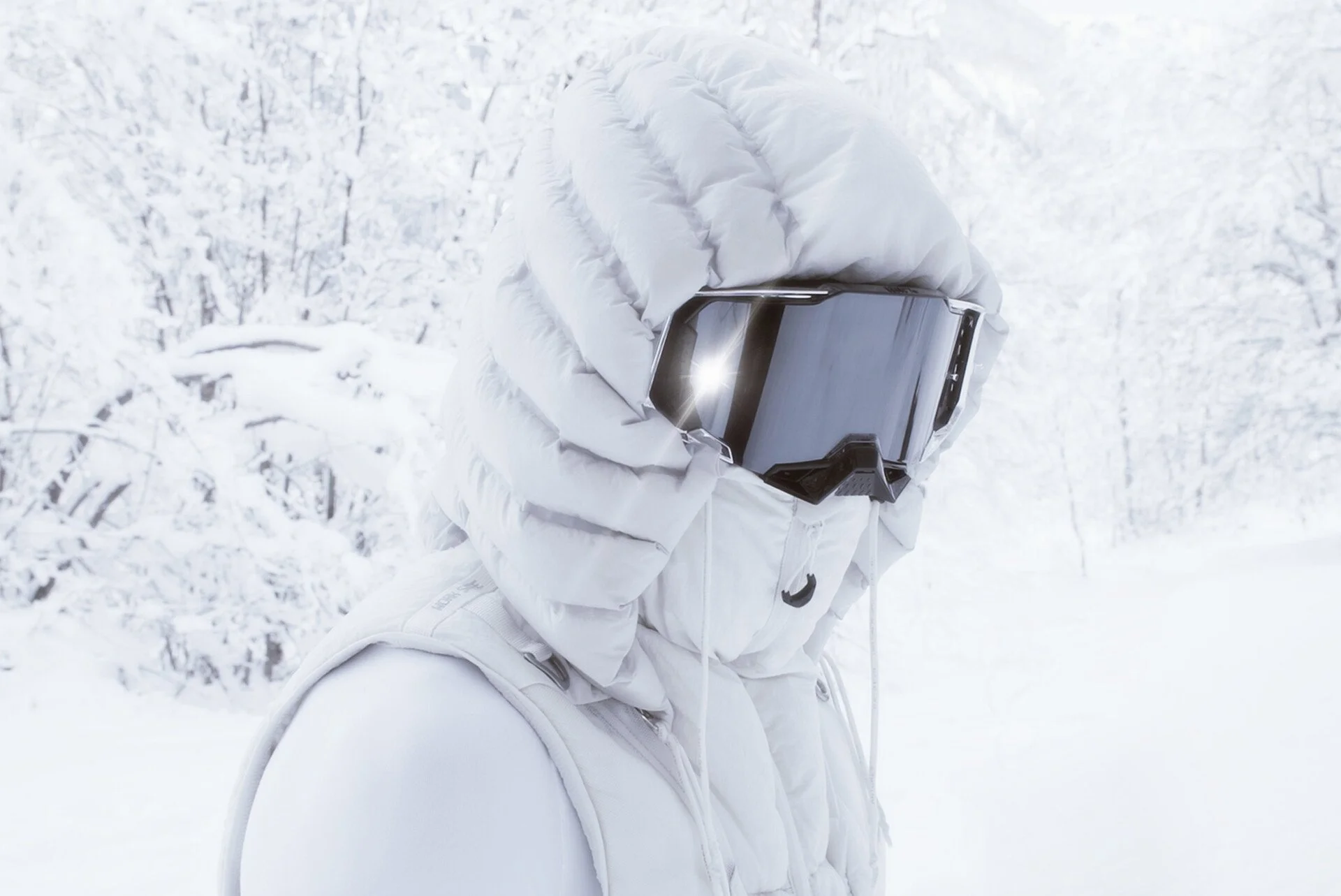
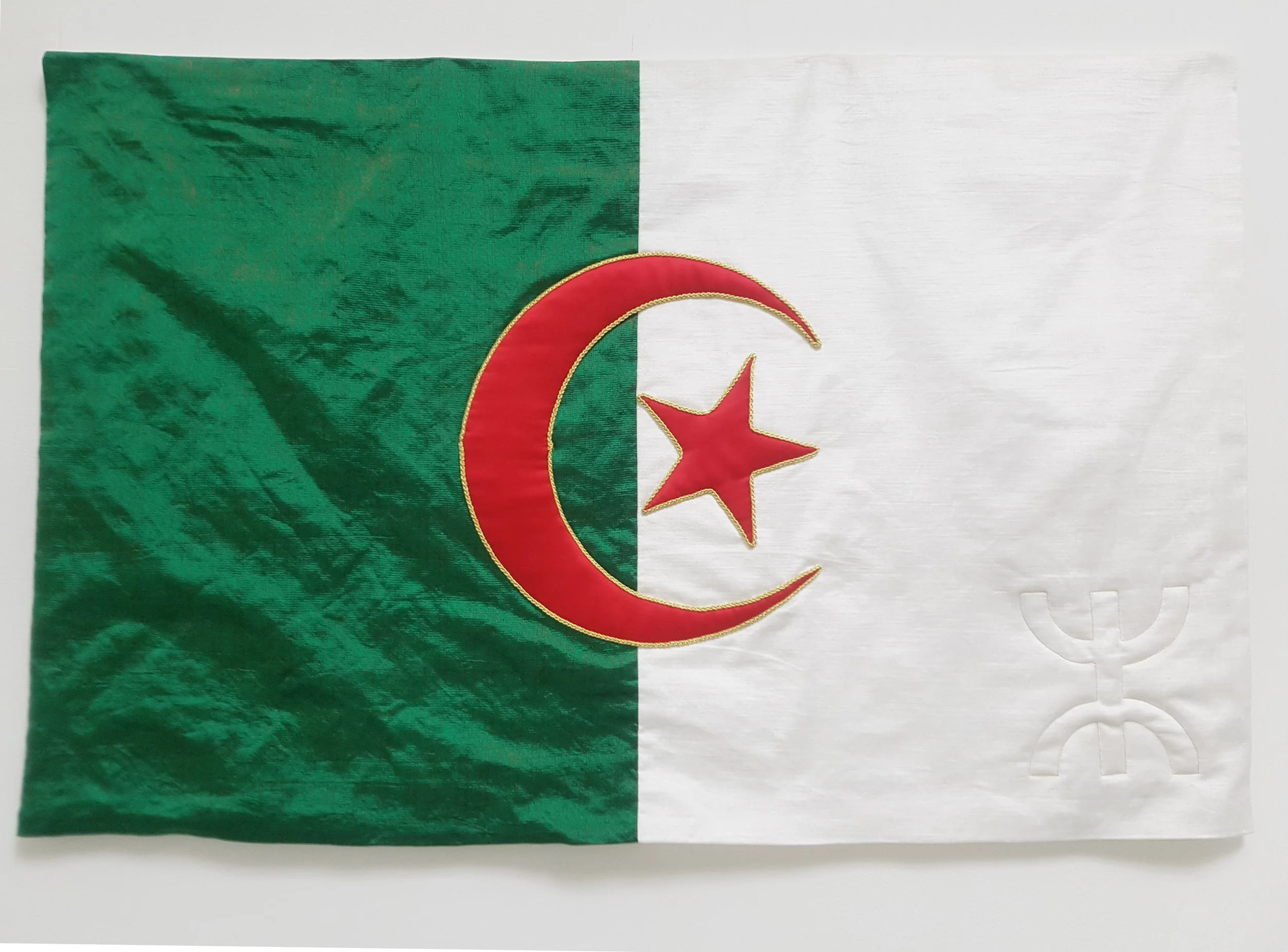
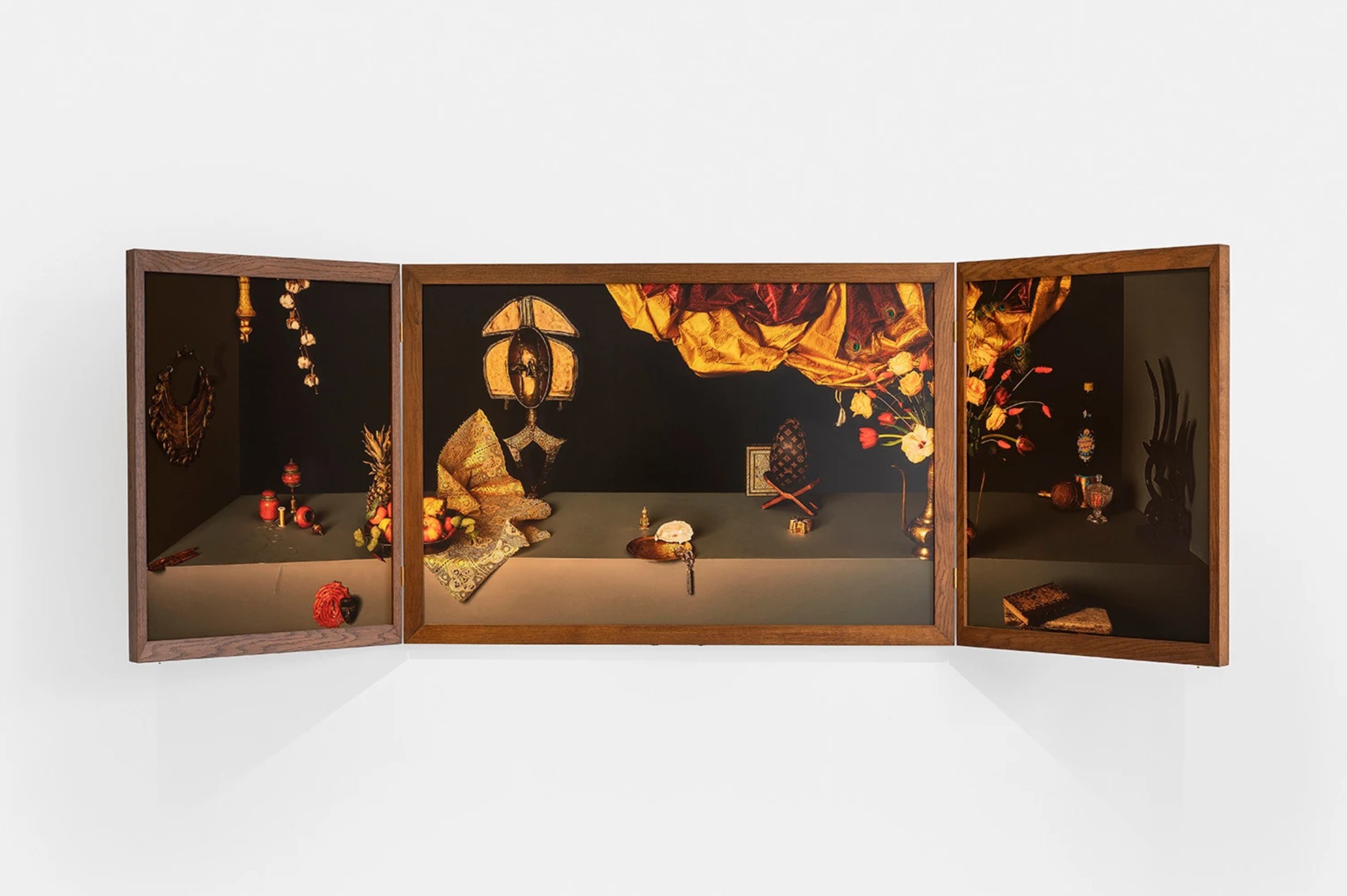
The works testify to a country with multiple layers, a history to be constantly reconfigured, changing identities, often expressed between languages - Arabic, French, English, Berber - playing with what each allows to say, or to keep quiet. This cultural permeability, made possible by a more connected society and an increasingly visible artistic scene, opens up an abundant creative field of which Wahib Chehata, the guest artist of the group exhibition, is perfectly representative. Navigating between images, working both AI and retouching software and more traditional techniques, he seeks to create bridges between cultures, to bring together various sensitivities through disorder. We can in the same way through the staging of Maya Inès Touam and her use of polyptychs perceive the problem of dealing with distinct heritages and influences and managing to actualize them, to live with them. In the same spirit, Katia Kameli explores the nature and status of images, navigating the gaps between colonial and postcolonial eras, between official and vernacular photography, to create narratives that fully embrace complexity.
With this programming, Hamid Khellafi affirms a project undoubtedly among the most intimate of his career.